Politics / Canada
Oil Prices and U.S. Blockade Impact
Oil prices have surged above $100 per barrel due to the U.S. military blockade of Iranian ports and the Strait of Hormuz. This blockade has caused significant disruptions in global oil supply, leading to a volatile market situation. The world typically consumes around 100 million barrels of oil daily, but current supply has dropped to approximately 85 million barrels.
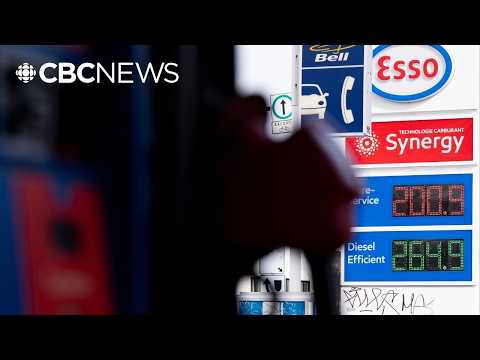
Source material: Oil prices back above $100 US a barrel as U.S. blockade begins
Summary
Oil prices have surged above $100 per barrel due to the U.S. military blockade of Iranian ports and the Strait of Hormuz. This blockade has caused significant disruptions in global oil supply, leading to a volatile market situation. The world typically consumes around 100 million barrels of oil daily, but current supply has dropped to approximately 85 million barrels.
Countries closer to the Persian Gulf, such as Bangladesh and Pakistan, are experiencing acute shortages, while regions like Australia and North America feel the impact differently. The ongoing blockade is expected to exacerbate these shortages, affecting economies worldwide. Canadian consumers are already facing higher gasoline prices, with British Columbia reporting an average of $1.95 per liter.
Concerns about rising fuel costs extend beyond gasoline to jet fuel and other energy prices. Travelers and consumers are increasingly anxious about the future of fuel prices and their economic implications. Analysts warn that the energy markets may not fully account for the severity of the situation, leading to potential further increases in prices.
The current crisis has created a significant gap in the global economy, with an estimated 700 million barrels not being delivered. This shortfall is impacting various sectors, including shipping and transportation, as the cost of diesel and jet fuel continues to rise. Without a resolution to the blockade, the situation is likely to worsen.
Perspectives
short
Support for U.S. Actions
- Highlights the necessity of the blockade to address geopolitical tensions
- Argues that the blockade is a response to ongoing threats in the region
- Claims that the U.S. military actions are aimed at stabilizing global oil markets
Criticism of U.S. Blockade
- Warns that the blockade exacerbates global oil shortages
- Questions the effectiveness of military actions in resolving economic issues
- Denies that the blockade will lead to long-term stability in oil prices
Neutral / Shared
- Notes the significant impact of oil price fluctuations on global economies
- Acknowledges the varying effects of oil shortages in different regions
- Mentions the uncertainty surrounding future fuel prices
Metrics
supply
85 million barrels
current oil supply
This shortfall is critical as it directly impacts global oil prices.
Right now we're allowing about 85 million barrels of oil a day to get out into world markets.
consumption
100 million barrels
global oil consumption
The gap between consumption and supply is causing economic strain.
the world generally consumes about a hundred million barrels of oil a day.
gasoline_price
$1.95 per liter USD
average gasoline price in British Columbia
Rising gasoline prices can lead to increased costs for consumers and businesses.
the average price of gasoline is 195 cents a dollar 95 per liter.
Key entities
Timeline highlights
00:00–05:00
Oil prices are rising sharply due to the U.S. blockade of Iranian ports, leading to a significant supply shortfall.
- Oil prices are increasing sharply due to the U.S. blockade of Iranian ports, disrupting regional shipping
- The world currently consumes about 100 million barrels of oil daily, but supply is only 85 million barrels. This shortfall is particularly impacting countries near the Persian Gulf
- Bangladesh and Pakistan are facing severe fuel shortages because of their location relative to the affected shipping routes. These shortages are expected to worsen as the blockade persists
- In Canada, gasoline prices have surged to $1.95 per liter in British Columbia. This rise raises concerns about escalating costs for jet fuel and air travel
- Experts caution that energy markets may not fully reflect the crisiss severity, potentially leading to further price increases. The blockade is creating a significant oil supply gap affecting various sectors
- The ongoing crisis has resulted in a global oil supply deficit estimated at 700 million barrels. Without a resolution, prices for fuels like diesel and jet fuel are likely to keep rising