Politics / Canada
Canada politics page with daily media monitoring across CBC News, CTV News and The Globe and Mail, structured summaries of domestic political developments and a country-level press overview.
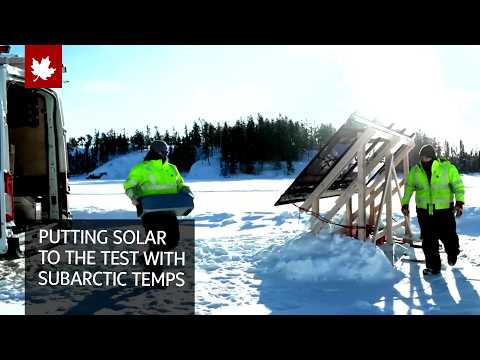
Canada's North puts solar to the test with subarctic temps
Summary
In Canada's Northwest Territories, extreme winter temperatures drive up electricity demand and costs, leading officials and businesses to explore solar power as a viable alternative. The region's long summer days present an opportunity for solar energy, despite the reliance on diesel and other conventional sources during winter months.
Ryan Connann, a senior science advisor, highlights the high availability of sunlight in the area compared to other regions, indicating a growing interest in moving away from fossil fuels. Climate change has exacerbated the situation, prompting community evacuations and increasing the urgency for sustainable energy solutions.
Local installers report a rising interest in solar energy driven by both environmental values and economic factors. High electricity prices, currently among the highest in Canada, motivate residents to consider solar as a more affordable option for energy.
Companies like EZUK are testing solar technology under harsh conditions, betting on its effectiveness in extreme climates. Initial evidence shows that solar panels can charge electric vehicles, although current installations are limited compared to typical household setups.
Perspectives
short
Pro-solar advocates
- Argue that long summer days make solar technology worthwhile despite winter challenges
- Highlight the high availability of sunlight relative to other regions
- Emphasize the growing appetite to reduce fossil fuel reliance
- Point out rising interest in solar due to high electricity costs
- Claim that solar energy can help address economic difficulties in the North
Skeptics of solar viability
- Question the reliability of solar power during extreme winter conditions
- Raise concerns about the effectiveness of solar energy as a primary source in harsh climates
- Highlight the ongoing dependence on diesel and conventional energy sources for winter reliability
Neutral / Shared
- Mention that some companies are stress testing solar technology in the region
- Note that initial evidence shows solar panels can charge electric vehicles
Metrics
electricity_price
38 cents per kilowatt USD
current electricity price in the Northwest Territories
High electricity prices are a significant driver for the adoption of solar energy.
We're currently sitting at about 38 cents a kilowatt
solar_panel_count
four solar panels units
number of solar panels used for testing
The limited number of solar panels raises questions about the scalability of solar solutions in harsh conditions.
we only have four solar panels set up today
Key entities
Timeline highlights
00:00–05:00
In Canada's Northwest Territories, extreme winter temperatures significantly increase electricity demand and costs, prompting interest in solar power as an alternative. Local businesses and officials are exploring solar energy to reduce reliance on fossil fuels amid rising electricity prices and climate change impacts.
- In Canadas Northwest Territories, winter temperatures can drop to about negative 49 degrees Fahrenheit in Yellowknife, increasing electricity demand and costs due to remote supply lines. Officials and businesses are testing solar power to see if it can help reduce bills and reliance on fossil fuels
- Ryan Connann, a senior science advisor with the government of the Northwest Territories, noted that the amount of sunlight available for solar power in the region is relatively high compared to other places. There is a growing interest in moving away from traditional fossil fuels, especially as climate change has led to community evacuations
- Local installers report a rising interest in solar energy among northerners, driven by both environmental values and economic factors. High electricity prices, currently around 38 cents per kilowatt, are pushing customers towards solar solutions as a means to afford living in the North
- Companies like EZUK are using the Northwest Territories to stress test electrification technology under harsh conditions. Adam Dunwoody, a technical manager for an electric vehicle charging equipment company, mentioned that their four solar panels can charge a car at a rate comparable to other locations, despite being only a quarter of the typical installation size