Politics / Belgium
Strait of Hormuz and Middle East Peace Prospects
The reopening of the Strait of Hormuz is crucial for global trade, allowing the passage of significant oil shipments. European leaders are collaborating to ensure maritime security and maintain safe passage for vessels in the region. Recent discussions among international leaders reflect a collective urgency to stabilize the area amid rising tensions.
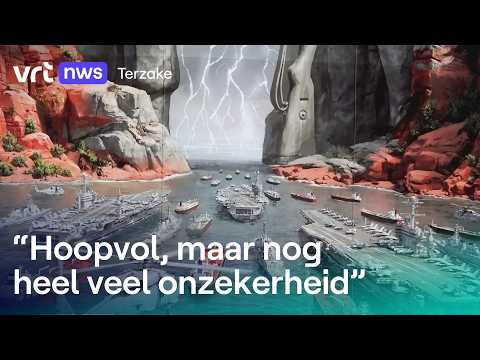
Source material: Zijn kansen op vrede in Midden-Oosten gestegen?
Summary
The reopening of the Strait of Hormuz is crucial for global trade, allowing the passage of significant oil shipments. European leaders are collaborating to ensure maritime security and maintain safe passage for vessels in the region. Recent discussions among international leaders reflect a collective urgency to stabilize the area amid rising tensions.
France and the UK are spearheading initiatives to address operations in the Strait, emphasizing the need for accessibility for commercial shipping. Leaders from Germany and Italy are also involved, indicating a unified approach to the challenges posed by Iran's actions and the geopolitical landscape.
Internal divisions within Iran regarding uranium stockpiles highlight a struggle between hardliners and moderates. The potential for renewed conflict raises concerns about the stability of the Strait of Hormuz, which could significantly impact oil prices and international shipping.
Diplomatic efforts to ensure the Strait's accessibility may be undermined by Iran's unpredictable behavior and the complex geopolitical dynamics at play. The effectiveness of these initiatives hinges on the willingness of all parties to compromise, which remains uncertain given historical tensions.
Perspectives
short
Proponents of Reopening the Strait
- Emphasize the importance of the Strait of Hormuz for global trade
- Highlight collaborative efforts among European leaders to ensure maritime security
- Advocate for a unified approach to stabilize the region amid rising tensions
Skeptics of Stability and Peace
- Question the effectiveness of diplomatic efforts given Irans unpredictable behavior
- Raise concerns about the potential for renewed conflict impacting oil prices and shipping
Neutral / Shared
- Acknowledge the complexity of geopolitical dynamics in the region
- Recognize the role of international leaders in addressing the situation
Metrics
oil_price_increase
10%
projected increase in oil prices
An increase in oil prices can have widespread economic implications.
The oil price will be increased by 10%
gas_price_increase
8%
projected increase in European gas prices
Higher gas prices can affect energy costs across Europe.
The European gas price will be increased by 8%
Key entities
Timeline highlights
00:00–05:00
The reopening of the Strait of Hormuz is vital for global trade, facilitating the passage of 20 million barrels of oil daily. European leaders are collaborating to ensure maritime security and maintain safe passage for vessels in the region.
- The reopening of the Strait of Hormuz is crucial for global trade, allowing the passage of 20 million barrels of oil daily, which has significantly lowered oil and gas prices
- Leaders from France, the UK, Germany, and Italy have met to discuss maritime security in the Strait of Hormuz, aiming to ensure safe passage for commercial vessels
- Both Iran and the United States have confirmed the Straits reopening, following a ceasefire between Israel and Lebanon, which has allowed Lebanese citizens to return home
- The European response has been cautiously optimistic, emphasizing unity to strengthen their negotiating position with global powers like the United States
- The involvement of various nations in the discussions reflects a commitment to neutrality and cooperation, advocating for the Strait to remain open without tolls for passing vessels
- Concerns persist about Irans commitment to keeping the Strait open, particularly if negotiations worsen, with Israels role being a significant factor in regional stability
05:00–10:00
France and the UK are organizing a meeting to discuss operations in the Strait of Hormuz, emphasizing the need for accessibility for commercial shipping. Leaders from Germany and Italy are also involved, reflecting a collective urgency to stabilize the region amid rising tensions.
- France and the UK are organizing a meeting next week to discuss operations in the Strait of Hormuz, aiming to unify countries in ensuring its accessibility for commercial shipping
- The involvement of leaders from Germany and Italy underscores a collective urgency to stabilize the region amid rising tensions surrounding the Strait of Hormuz
- India and China, both economically impacted by the situation, are advocating for the Straits reopening without conditions, highlighting its global importance
- There is a shared agreement among nations that reopening the Strait of Hormuz is vital for regional stability, though some countries remain cautious about escalating tensions with Iran
- Negotiations in Islamabad between Iran and foreign states are crucial, particularly concerning Irans uranium program and the potential withdrawal of U.S. troops
- The ceasefire between Israel and Hezbollah is a significant factor, with Israels future actions likely influenced by U.S. pressure
10:00–15:00
The Iranian foreign minister highlights a division within Iran regarding uranium stockpiles, indicating a struggle between hardliners and moderates. Concerns persist about the stability of the Strait of Hormuz, as renewed conflict could significantly impact oil prices and international shipping.
- The Iranian foreign minister indicates a division within Iran regarding uranium stockpiles, with pragmatists willing to dilute uranium to reduce nuclear threats. This internal conflict highlights the ongoing tension between hardliners and moderates in Irans approach to nuclear negotiations
- Concerns remain about the stability of the situation in the Strait of Hormuz, as a return to violence could drastically affect oil prices and international shipping. The potential for renewed conflict underscores the fragility of the current diplomatic progress
- The recent diplomatic meeting in Paris signals a significant international effort to address Middle Eastern tensions, involving major global players. This collaboration could lead to a more coordinated response to security challenges in the region
- Military planning discussions are underway among participating nations, focusing on how to enhance security in the Strait of Hormuz. The outcome of these discussions could determine the effectiveness of international efforts to stabilize the region
- The U.S. military presence in the Middle East remains crucial, but maintaining control over shipping lanes is proving challenging
- Europes role in the geopolitical landscape is evolving, with a push for greater autonomy in foreign policy. This shift could lead to a more balanced partnership with the U.S, impacting future diplomatic relations and strategies