Politics / Belgium
Belgium politics page with daily media monitoring across RTBF, VRT NWS and BRUZZ, structured summaries of domestic political developments and a country-level press overview.
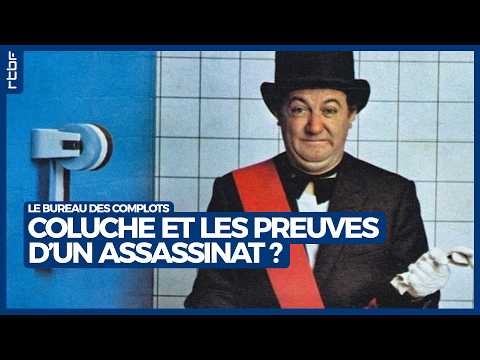
Coluche et les preuves d'un assassinat ? - Le Bureau des Complots
Summary
Coluche, a prominent French comedian, died in a motorcycle accident in 1986, which has since sparked numerous conspiracy theories regarding the circumstances of his death. Officially deemed an accident, inconsistencies in the narrative have led to speculation about potential foul play and political motives. Investigative journalist Jean Depussé dedicated 20 years to uncovering these inconsistencies, revealing doubts about the official account.
Coluche's popularity and political aspirations, including a presidential candidacy, positioned him as a significant figure in French society. His death occurred during a time when he was preparing for a major return to the stage, raising questions about whether his political influence made him a target. Witness accounts and media reports surrounding the accident have been conflicting, further complicating the narrative.
Depussé's investigation highlighted several anomalies, such as the road conditions at the time of the accident, which were not as dangerous as reported. Eyewitness testimonies suggested that the truck involved in the accident behaved unusually, leading to suspicions of a staged incident. The rapid police response and discrepancies in media coverage have also fueled speculation about a cover-up.
A retired police officer later claimed to possess a confidential dossier indicating that Coluche's death was orchestrated rather than accidental. This revelation added another layer to the ongoing investigation, suggesting that powerful interests may have been involved in suppressing the truth about his death. Despite these claims, concrete evidence remains elusive.
Perspectives
Analysis of Coluche's death and the surrounding conspiracy theories.
Proponents of Conspiracy Theories
- Argue that Coluches death was politically motivated due to his rising influence
- Highlight inconsistencies in the official accident report
- Claim that eyewitness accounts suggest foul play
- Point to the rapid police response as suspicious
- Suggest that Coluche was targeted for revealing state secrets
Skeptics of Conspiracy Theories
- Reject claims of foul play due to lack of concrete evidence
- Emphasize the possibility of human error in witness accounts
- Argue that the narrative is shaped by speculation rather than facts
- Point out that accidents can occur without malicious intent
Neutral / Shared
- Acknowledge Coluches significant impact on French culture and politics
- Recognize the ongoing public interest in the circumstances of his death
- Note that many theories lack empirical support
Metrics
support
between 10 and 15% of the votes
Coluche's presidential candidacy
This level of support indicates significant public engagement with his political message.
he gives, between 10 and 15% of the votes.
speed
160 kilometers km/h
speed at which Depussé tested the road conditions
This speed indicates that braking was possible, challenging the narrative of an unavoidable accident.
he constates that there is largely the time of braking.
response_time
25 minutes
time taken for firefighters to arrive after the police established a roadblock
This rapid response raises questions about the nature of the incident.
the E-tiles' firefighters would arrive at the end of 40 minutes, so almost 25 minutes after the installation of the barrage.
media_reporting_time
15.46 time
time reported for Coluche's death before it actually occurred
This discrepancy fuels speculation about a cover-up.
the first pages had been addressed to the Red Action to announce the death of Coluch, and was dated at 15.46.
witness_count
two witnesses
number of witnesses providing conflicting accounts
Conflicting accounts complicate the narrative surrounding the accident.
the two friends, Ludovic Paris, runs up to a pepinière which is located at 300 meters from there to call the firefighters.
weight
38 tons
weight of the truck involved in the accident
The truck's weight raises concerns about its ability to navigate the accident scene safely.
the truck of these guys, on the small guy who crossed the road the day of this constitution
weight
3 tons
weight limit of the small bridge
The significant difference in weight limits suggests potential negligence in vehicle operation.
a bus can not support more than 5 tons
deliveries
more than 10,000 tonnes of dents units
food distributed by Les Restos du Cœur
This highlights Coluche's significant impact on social welfare in France.
more than 10,000 tonnes of dents
Key entities
Timeline highlights
00:00–05:00
The circumstances surrounding Coluche's 1986 motorcycle death have led to speculation about political motives and possible foul play. His legacy continues to influence public discourse on authority and societal change.
- The suspicious circumstances surrounding the 1986 motorcycle death of French comedian Coluche, with many suspecting it was a politically motivated assassination due to his rising influence
- Coluche was a prominent cultural figure known for his provocative humor, and his potential return to politics raised alarms among powerful individuals, leading to speculation about foul play in his death
- Inconsistencies in the official account of Coluches accident have fueled conspiracy theories, suggesting political motives and possible involvement from secret services, reflecting societal unease
- Listeners are prompted to reflect on how Coluches death impacts public discourse and trust in political power, illustrating how celebrity deaths can ignite widespread speculation
- The segment emphasizes the need to explore alternative viewpoints rather than dismissing them, encouraging critical examination of events that shape public beliefs
- The conversation highlights broader concerns about authority and hidden agendas in significant events, with Coluches legacy prompting ongoing discussions about the links between comedy, politics, and societal change
05:00–10:00
Coluche was a prominent French comedian who gained significant popularity and political traction during his 1980 presidential candidacy. His unexpected death in a motorcycle accident in 1986 has led to ongoing speculation about potential foul play and political motives.
- Coluche, a beloved French comedian, resonated with diverse audiences through his candid humor and relatable persona, becoming a cultural icon in France
- His 1980 presidential candidacy, initially perceived as a joke, gained serious traction as polls indicated substantial support, leading him to withdraw under pressure
- In 1985, he established Les Restos du Cœur, a charity that provided meals to the underprivileged, highlighting his commitment to social issues beyond entertainment
- Coluches death in a motorcycle accident in June 1986 was quickly labeled an accident, but the circumstances raised suspicions and fueled conspiracy theories about a possible assassination
- Skepticism surrounding the official account of his death emerged due to inconsistencies, sparking ongoing debates about potential political motives
- Coluches legacy continues to ignite discussions on the relationship between comedy and politics in France, reflecting broader societal anxieties
10:00–15:00
Jean Depussé has dedicated 20 years to investigating the inconsistencies surrounding Coluche's motorcycle accident, revealing doubts about the official narrative. His findings suggest that the road conditions were not as perilous as reported, raising questions about potential foul play and political motives.
- Jean Depussé, an independent journalist, spends 20 years investigating the inconsistencies surrounding Coluches motorcycle accident, highlighting ongoing suspicions about the incident
- Depussé finds that the road where Coluche died is not as perilous as reported, contradicting media claims about a nearby camping site and raising doubts about the official narrative
- His tests at the accident scene reveal that even at high speeds, there was sufficient time to brake, challenging the notion of an unavoidable collision
- Depussé meets Serge lArménien, a former secret agent, who suggests that Coluche was targeted to intimidate him due to his political ambitions, indicating potential motives from powerful interests
- After their meeting, Serge lArménien is murdered, raising concerns about the safety of those involved in the investigation and hinting at a possible conspiracy
- As Depussé gathers more evidence and interviews witnesses, he uncovers a complex web of information that contradicts the official account of Coluches death, suggesting hidden truths in high-profile cases
15:00–20:00
Witnesses to Coluche's accident provide conflicting accounts, raising doubts about whether it was truly an accident. The rapid police response and discrepancies in media reporting suggest potential foul play.
- Witnesses to Coluches accident provide conflicting accounts, particularly regarding the trucks maneuvering. This adds to doubts about the circumstances surrounding his death and whether it was truly an accident
- One witness describes the truck as moving normally until it suddenly swerved, leaving little time for Coluche to react. This detail suggests a potential deliberate action rather than a mere accident
- The timeline of events is suspicious, with police establishing a roadblock shortly after the accident, even before emergency services arrived. This rapid response indicates a level of preparedness that seems unusual for a typical traffic incident
- A key piece of evidence is a news dispatch that reported Coluches death an hour before it actually occurred. This discrepancy fuels speculation about a cover-up or conspiracy related to his death
- Further investigation reveals a video report that contradicts initial media narratives, showing the truck not engaged in any dangerous maneuvers. This visual evidence challenges the official story and suggests a need for deeper scrutiny
- The overall lack of traffic on a busy tourist road at the time of the accident is also puzzling. This anomaly adds to the growing list of inconsistencies that could imply foul play
20:00–25:00
Jean Depussé's investigation reveals significant inconsistencies between official reports and eyewitness accounts regarding Coluche's accident. The initial oversight by an inexperienced judge and missed critical details during reconstruction raise questions about the investigation's thoroughness.
- Jean Depussés investigation highlights major inconsistencies between official reports and eyewitness accounts, raising doubts about the true nature of Coluches accident
- The case was initially overseen by an inexperienced judge, which is unexpected given its high-profile status and may have affected the investigations thoroughness
- During the accident reconstruction, critical details were missed, such as the truck not crossing a small bridge, casting doubt on the reliability of the evidence
- The trial commenced 18 months post-accident with minimal attendance, only the truck driver was present, indicating a lack of accountability for other responsible parties
- A local official suggested the truck driver may have been involved in an illegal dumping scheme, but this theory does not fully clarify his actions during the accident
- Despite evidence contradicting the idea of a simple accident, Depussé remains doubtful about the official narrative, underscoring the need for further investigation
25:00–30:00
Jean Depussé's investigation into Coluche's death uncovers significant inconsistencies in the official narrative, suggesting potential foul play. A retired police officer claims to have a dossier indicating that Coluche's death was orchestrated rather than accidental.
- Jean Depussés investigation into Coluches death reveals significant inconsistencies in the official account, driving his relentless pursuit of the truth
- A retired Parisian police officer named Gérard claims to possess a confidential dossier suggesting Coluches death was orchestrated rather than accidental
- Gérard describes a meeting with a woman who stole a classified file detailing a conspiracy to stage Coluches fatal accident, complicating the investigation further
- The dossier allegedly includes a meticulous plan involving Coluches friends as accomplices, indicating a deliberate effort to eliminate him due to his political rise
- The informants sudden disappearance raises concerns about the risks faced by those attempting to reveal the truth behind Coluches death
- As Depussé nears the truth, he discovers he has cancer, prompting him to share his findings with another journalist, highlighting the urgency of his investigation