Politics / Austria
Pluralistic review of domestic politics through national press, media commentary and public debate across diverse political perspectives. Topic: Austria. Updated briefs and structured summaries from curated sources.
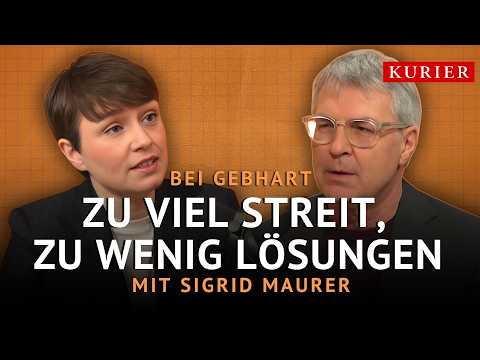
Sigrid Maurer über Regierung: „Viele Ankündigungen, keine Lösungen“
Summary
Sigrid Maurer criticizes the Austrian government's failure to address rising energy prices and the ongoing dependence on fossil fuels. She emphasizes the need for immediate government action to support consumers and transition to renewable energy sources, highlighting the detrimental impact of the current energy crisis on the population.
The government has not implemented promised initiatives, leading to public discontent regarding its effectiveness in addressing social issues. Maurer advocates for equitable taxation and social justice amidst growing economic disparities, particularly emphasizing the need for a millionaire tax to address wealth inequality.
A significant majority of the Austrian population supports the introduction of a millionaire tax, indicating a demand for greater equity in taxation. The government's actions, perceived as favoring the wealthy while neglecting middle and lower-income families, have led to public outrage and calls for reform.
Maurer emphasizes the importance of engaging directly with teachers to accurately address their concerns in educational reforms. She advocates for a longer, more inclusive educational period to reduce pressure on children and improve outcomes, arguing that early sorting of children into educational tracks is unfair.
Perspectives
short
Sigrid Maurer and the Green Party
- Criticizes government inaction on energy prices and fossil fuel dependence
- Calls for immediate action to support consumers and transition to renewable energy
- Advocates for equitable taxation, specifically a millionaire tax
- Highlights public outrage over perceived favoritism towards the wealthy
- Emphasizes the need for educational reforms that engage teachers and reduce pressure on students
- Critiques the outdated education system and calls for differentiation to meet individual needs
Austrian Government
- Accused of failing to implement promised initiatives
- Perceived as prioritizing corporate interests over citizen welfare
- Criticized for lack of transparency and accountability in governance
- Accused of relying on announcement-driven strategies without substantive action
- Faced public discontent regarding effectiveness in addressing social issues
Neutral / Shared
- Public sentiment indicates a strong desire for reform in taxation and education
- Discussions around the need for political accountability and transparency are prevalent
Metrics
other
the people are now in the zapsol, the big wins of the Ölconcern
public sentiment regarding oil company profits
This reflects public frustration over corporate profits during crises.
the people are now in the zapsol, the big wins of the Ölconcern
other
the economy, its investments, is held behind it
impact of government inaction on economic investments
This indicates a direct link between government decisions and economic recovery.
the economy, its investments, is held behind it
tax
millionaire steuer
proposed tax on millionaires
It reflects the government's failure to address wealth inequality.
we hold a millionaire steuer with the appropriate contribution.
financial_support
thousands of euros for every family EUR
climate bonus for families
It highlights the government's inadequate support for families during economic consolidation.
they are thousands of euros for every family in Austria.
other
500 euros EUR
maximum income for a public service role
This highlights the disparity in compensation within public service roles.
The maximum income that can reach are 500 euros.
other
3,500 euros per month EUR
compensation for a personal driver
This stark contrast raises concerns about fairness in public sector remuneration.
The free-term personal driver, with the same service, is received 3,500 euros per month.
other
800 euros EUR
total compensation in Salzburg
This figure illustrates the disparity in public service compensation across regions.
Salzburg has a number of 800 euros in total.
other
3,000 euros EUR
compensation in Vienna
This indicates significant regional disparities in public sector pay.
Vienna has always paid 3,000 euros for the last few years.
Key entities
Timeline highlights
00:00–05:00
Sigrid Maurer criticizes the government's failure to address rising energy prices and the ongoing dependence on fossil fuels. She calls for immediate government action to support consumers and transition to renewable energy sources.
- Sigrid Maurer criticizes the governments handling of rising energy prices, arguing that citizens should not bear the burden of oil companies profits during crises. This highlights the need for immediate government intervention to protect consumers
- She emphasizes Austrias ongoing dependence on fossil fuels, calling for a swift transition to renewable energy sources. Ending this reliance is crucial for national security and reducing vulnerability to external conflicts
- Maurer points out that despite previous measures taken during the Ukraine crisis, the current government has failed to pass necessary legislation to support the economy. This inaction is causing businesses to hesitate on investments, which could hinder economic recovery
- The Green Party is willing to collaborate with the government on effective solutions, but they remain critical of the lack of concrete actions. Maurer insists that the government must present viable laws that improve citizens lives for their support
- She expresses frustration over the governments tendency to make numerous announcements without delivering tangible results. This pattern of behavior undermines public trust and leaves citizens feeling neglected amid ongoing challenges
- Maurer notes that the coalition government often struggles with internal disagreements, leading to public confusion and ineffective governance. This disarray prevents the government from addressing pressing issues and delivering coherent policies
05:00–10:00
The government has failed to implement promised initiatives, leading to public discontent regarding its effectiveness in addressing social issues. The Green Party advocates for equitable taxation and social justice amidst growing economic disparities.
- The government has repeatedly announced initiatives, such as a social media ban for minors, but these proposals remain unimplemented. This lack of action suggests a disconnect between the governments promises and the needs of the population
- There is a significant concern that the ruling parties are not prioritizing the interests of the public. This adds to doubts about their effectiveness in addressing pressing social issues
- The introduction of a millionaire tax has been a contentious topic, with the government failing to deliver on previous commitments. This failure to act on wealth redistribution is seen as unjust, especially in a time of economic consolidation
- The government has made cuts to public services while the wealthiest continue to evade their fair share of taxes. This disparity in fiscal responsibility is viewed as inequitable and detrimental to social cohesion
- The Green Party emphasizes the need for all citizens, including the wealthy, to contribute to economic recovery efforts. Their stance reflects a broader call for fairness in the distribution of financial burdens during challenging times
- Despite the challenges, the Green Party remains committed to advocating for social justice and equitable taxation. Their ongoing efforts highlight the importance of holding the government accountable for its promises to the public
10:00–15:00
A significant majority of the Austrian population supports the introduction of a millionaire tax, indicating a demand for greater equity in taxation. The government's actions, perceived as favoring the wealthy while neglecting middle and lower-income families, have led to public outrage and calls for reform.
- A significant majority of the Austrian population supports the introduction of a millionaire tax, reflecting a demand for greater equity in taxation. This sentiment underscores the perception that the wealthy are not contributing their fair share during times of economic consolidation
- The government has faced criticism for prioritizing the interests of the wealthy while cutting benefits for middle and lower-income families. Such actions are seen as unjust, especially when the burden of financial recovery falls disproportionately on those who are already struggling
- Concerns have been raised about a recent decision to grant excessive allowances to personal representatives in the education sector, which has sparked outrage among teachers. The disparity in compensation highlights systemic inequities within public service remuneration
- The introduction of these allowances without public debate or transparency has been labeled as a dirty deal by critics. This lack of accountability adds to doubts about the integrity of the governments decision-making processes
- The ongoing discussions about educational funding and teacher compensation are crucial for addressing the needs of students and educators alike. Engaging with teachers directly is essential to understand their challenges and advocate for necessary reforms
- The government’s failure to uphold promises regarding salary increases for teachers while simultaneously rewarding certain officials with high allowances is seen as a betrayal. This situation could lead to increased discontent among public sector workers and calls for reform
15:00–20:00
Sigrid Maurer emphasizes the importance of engaging directly with teachers to accurately address their concerns in educational reforms. She advocates for a longer, more inclusive educational period to reduce pressure on children and improve outcomes.
- Sigrid Maurer stresses the need for direct engagement with teachers to accurately represent their concerns in her parliamentary efforts, as their issues often differ from political narratives
- The discussion on educational reforms, especially regarding Latin instruction, is criticized for lacking depth and focus on broader educational needs
- Maurer points out the pressure on children in Austrias education system, advocating for a longer, more inclusive educational period before making significant career decisions
- She argues that the current system, which sorts children at age ten, creates undue stress and believes that extended shared learning would improve educational outcomes
- Maurer challenges the notion that gymnasiums represent the highest form of education, highlighting the value of diverse educational paths in creating a well-rounded workforce
- She calls for a realignment of educational priorities to better equip students with practical skills and knowledge relevant to the job market
20:00–25:00
Austria's education system is criticized for being outdated and lacking differentiation to meet individual student needs. There is a call for reform in the ORF's governance to eliminate political influence and better serve public interests.
- Austrias education system is outdated and requires reform to ensure equal opportunities for all children, aligning with international standards
- There is a critical need for educational differentiation to address individual student strengths, as highlighted by OECD reports advocating for personalized learning
- Sigrid Maurer is skeptical about proposals to extend primary school duration, viewing them as poorly planned and lacking thorough consideration
- Discussions regarding the future of the ORF reveal a disconnect between political interests and public needs, necessitating a reform that prioritizes audience interests
- A significant overhaul of the ORFs governance structure is essential to remove political influence and ensure the organization serves the public effectively
- Maurer criticizes the ORFs current leadership for inadequate management and calls for a more transparent system that focuses on audience needs over political agendas
25:00–30:00
Sigrid Maurer criticizes the government's approach as being focused on announcements rather than providing tangible solutions. This has resulted in a decline in public trust.
- Sigrid Maurer criticizes the governments approach, labeling it as announcement-driven without delivering real solutions, which undermines public trust