Politics / Australia
Cuba's Stance Against US Military Pressure
Cuban president Miguel Diaz-Canel has declared a commitment to defend the nation against U.S. military aggression, reflecting a long-standing sentiment in Cuba's political landscape. The Bay of Pigs invasion marked a pivotal moment, leading to Cuba's alliance with the Soviet Union and ongoing tensions with the United States.
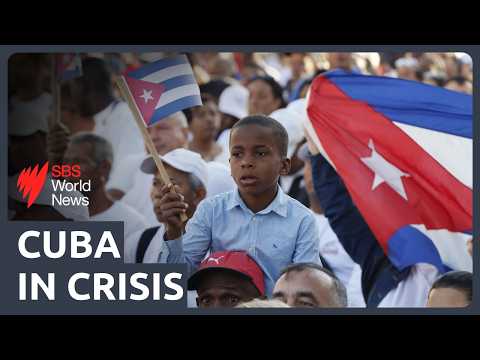
Source material: Cuba's president vows to resist US aggression
Summary
Cuban president Miguel Diaz-Canel has declared a commitment to defend the nation against U.S. military aggression, reflecting a long-standing sentiment in Cuba's political landscape. The Bay of Pigs invasion marked a pivotal moment, leading to Cuba's alliance with the Soviet Union and ongoing tensions with the United States.
Current U.S. policies continue to impose strict restrictions on Cuba, with the Biden administration maintaining a tough stance that echoes previous administrations. The ongoing oil blockade has severely impacted Cuba's economy, exacerbating electricity shortages and other challenges.
Despite these pressures, Cuban leadership maintains a defiant tone, asserting their resilience against external threats. However, the narrative of unity and strength may overlook internal dissent and economic struggles faced by the population.
The initial optimism surrounding U.S.-Cuba relations has dissipated over the past decade, leading to a more hostile environment with limited prospects for reconciliation. The Cuban exile community's hopes for a swift resolution following the U.S.-backed invasion have largely been unmet.
Perspectives
short
Cuban leadership
- Affirms commitment to resist US military aggression
- Maintains a defiant tone despite economic challenges
US government
- Imposes strict restrictions and an oil blockade on Cuba
- Continues a tough stance on Cuba, reflecting past policies
Neutral / Shared
- Cuban exile community expresses disappointment over unresolved issues
- Historical context of the Bay of Pigs invasion shapes current sentiments
Key entities
Timeline highlights
00:00–05:00
Cuban president Miguel Diaz-Canel has vowed to defend the nation against perceived U.S. military aggression.
- The Bay of Pigs invasion significantly altered Cubas trajectory, fostering a lasting partnership with the Soviet Union and intensifying U.S.-Cuba tensions over governance
- The current U.S. administration has maintained stringent restrictions on Cuba, reflecting continuity in its policy approach
- Cuban leaders assert their commitment to resist U.S. aggression, highlighting their capacity to endure external challenges
- The initial optimism in U.S.-Cuba relations from a decade ago has faded, creating a more hostile environment with little prospect for reconciliation
- The Cuban exile communitys hopes for a quick resolution following the U.S.-backed invasion have been met with disappointment, influencing views both on the island and among expatriates
- Cubas ongoing economic difficulties, worsened by U.S. policies, underscore the precariousness of the nations situation