Politics / Australia
Australia politics page with daily media monitoring across ABC News Australia, SBS News and SMH/The Age, structured summaries of domestic political developments and a country-level press overview.
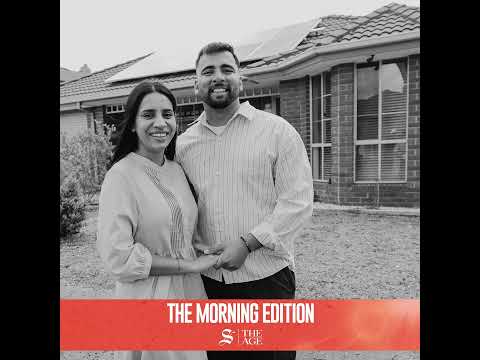
How the 'Great Australian Dream' of home ownership has changed
Summary
Housing affordability in Australia has reached unprecedented lows, prompting younger generations to reconsider home ownership. Historical perspectives reveal that previous generations enjoyed more accessible housing options due to supportive government policies and stable prices. The shift in government focus from supply to demand has significantly altered the landscape of home ownership.
Current median dwelling values have soared to $901,000, while median household incomes lag at $104,000, creating a stark disparity. Younger generations increasingly rely on parental support and face longer commutes as they seek affordable housing options. Many are forced to live far from city centers, complicating their daily lives.
Some individuals opt to rent rather than buy, viewing this as a rational response to an unstable market. Renting allows for flexibility and adaptability to changing family needs, contrasting with the traditional view of home ownership as a necessary goal. This shift reflects a broader change in attitudes towards housing and living arrangements.
The current government is contemplating tax reforms aimed at addressing housing affordability, but their potential effectiveness remains uncertain. Critics argue that significant political will is required to implement changes that could disrupt the entrenched interests of homeowners. Without addressing the underlying economic conditions, any proposed reforms may fall short.
Perspectives
short
Proponents of Home Ownership
- Highlight historical accessibility of housing for previous generations
- Argue that government policies once supported home ownership
- Claim that owning a home contributes to a stable society
Critics of Current Housing Policies
- Warn that current housing prices are unsustainable for younger generations
- Accuse government policies of inflating demand rather than boosting supply
- Question the effectiveness of proposed tax reforms in addressing affordability
Neutral / Shared
- Acknowledge the shift in perception of housing from a basic need to a wealth-building tool
- Recognize the challenges faced by younger generations in achieving home ownership
Metrics
mortgage_payment
around about $100, maybe a little bit more a month USD
Neil's monthly mortgage payment
This manageable payment contrasts sharply with current mortgage costs.
I paid it off monthly in around about $100, maybe a little bit more a month.
wage_ratio
three and a half times the average wage
House prices relative to average wages in the past
This ratio indicates the affordability of homes compared to current standards.
Houses cost about three and a half times, the average wage.
median dwelling value
$901,000 USD
current median dwelling value in Australia
This figure highlights the extreme cost of housing relative to income.
Australians, median dwelling value is now $901,000
median household income
$104,000 USD
current median annual household income in Australia
This income level is insufficient to afford housing without significant savings.
compared with a median annual household pre-tax income of $104,000
years to save deposit
11 years
time required to save a 20% deposit for a home
This indicates the growing financial burden on potential homeowners.
which means it would take 11 years to save a 20% deposit
investment properties
2.5 million units
number of Australians who own at least one investment property
This figure underscores the prevalence of investment properties in the housing market.
about 2.5 million Australians who own at least one investment property
Key entities
Timeline highlights
00:00–05:00
Housing affordability in Australia has reached unprecedented lows, prompting younger generations to reconsider home ownership. Historical perspectives reveal that previous generations enjoyed more accessible housing options due to supportive government policies and stable prices.
- Housing affordability in Australia is at an all-time low, forcing young people to rethink home ownership
- Caroline Zielinski notes that older Australians often paid off mortgages by their 30s or 40s, unlike todays struggles
- Neil Robertsons experience buying a house for $7,500 illustrates the pasts manageable housing market
- Homes in the 1950s, though modest, offered stability and achievement, contrasting with todays expectations
- Post-World War II political ideology promoted home ownership as a path to national stability
- Mid-20th century government policies boosted housing supply, creating affordable options that are now scarce
05:00–10:00
Housing affordability in Australia has significantly declined, with median dwelling values reaching $901,000 and median household incomes at $104,000. Younger generations are increasingly reliant on parental support and face longer commutes due to the rising costs of homeownership.
- Menzies 1963 homeowners grant shifted focus from housing supply to wealth accumulation, altering perceptions of homeownership
- Policies since the 1970s, including capital gains tax changes, have inflated property prices, making homeownership less attainable
- Zoning laws have increased redevelopment costs, limiting higher density living and worsening affordability issues
- Many Australians now live in outer suburbs with inadequate amenities, leading to longer commutes and reduced access to services
- The median dwelling value is $901,000, while the median household income is $104,000, requiring 11 years to save a 20% deposit
- Over half of those born in the late 1980s do not own homes by their early 30s, indicating a generational shift in ownership
10:00–15:00
Younger Australians are increasingly opting to rent due to the high costs of homeownership, with many viewing this as a rational response to an unstable market. The current government is contemplating tax reforms, but their effectiveness in addressing housing affordability remains uncertain.
- Will and Katie chose to rent due to affordability issues, viewing it as a rational response to an unstable market
- Younger Australians are shifting from houses to units, reflecting a need for affordable housing options
- The current government is considering tax reforms, but their impact on affordability remains uncertain
- Homeowners may need to prioritize future generations access to homeownership over their own interests
- The median dwelling value is $901,000, while the median household income is only $104,000, requiring over 11 years to save for a deposit
- More than half of those born in the late 1980s do not own homes by their early 30s, indicating a generational shift
15:00–20:00
Housing affordability in Australia is at a critical juncture, with around 12 million Australians owning homes or investment properties. The median entry-level home price in Melbourne has reached $720,000, exacerbating the affordability crisis and complicating commuting for workers.
- Around 12 million Australians own homes or investment properties, complicating reforms to stabilize the housing market
- Unit buyers from a decade ago are now priced out as house prices surge faster than unit prices, widening the affordability gap
- The median entry-level home price in Melbourne is $720,000, often far from urban centers, complicating commuting for workers
- Major political intervention is needed to address the housing crisis, as current measures are inadequate for rising house prices
- Politicians hesitate to implement solutions that may devalue homes, obstructing necessary housing market reforms
- Experts warn the housing situation is a pressure cooker, with urgent political will needed for change