Politics / Australia
Australia politics page with daily media monitoring across ABC News Australia, SBS News and SMH/The Age, structured summaries of domestic political developments and a country-level press overview.
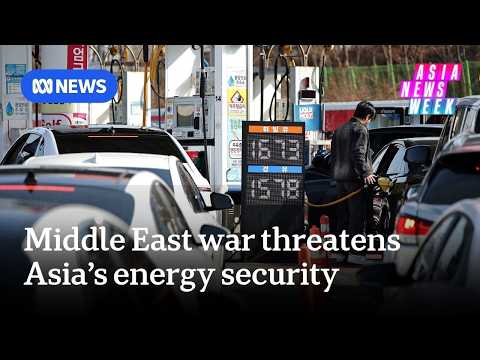
Why the Strait of Hormuz is integral to Asia | Asia News Week | ABC News
Summary
The Strait of Hormuz plays a vital role in the global oil market, with a significant percentage of crude oil and refined products transiting through this narrow passage. Asian countries, particularly China and Japan, heavily rely on this route for their oil supply, making them particularly vulnerable to disruptions.
In the event of a supply disruption lasting two to three weeks, many Asian nations could face severe shortages and economic repercussions. Countries like China and Japan have built substantial stockpiles, which may provide temporary relief, but the long-term implications of losing access to Middle Eastern crude are concerning.
While China and Japan are better positioned due to their storage capabilities, other nations such as Thailand and Vietnam may struggle to cope with supply shortages. These countries have limited stockpiles and would face logistical challenges in sourcing oil from alternative suppliers like the US.
Iran's economy is also affected, as it relies on the Strait for importing goods, while its crude oil exports are crucial for China's privately owned refiners. Disruptions in this supply chain could lead to significant financial strain on these refiners, potentially forcing some to cease operations.
Perspectives
short
Proponents of stockpiling and preparedness
- Highlight stockpiles in China and Japan as a buffer against supply disruptions
- Argue that significant storage volumes place these countries in a stronger position
- Emphasize the importance of the Strait of Hormuz for global oil transport
Critics of reliance on stockpiles
- Question the logistical challenges of sourcing oil from alternative suppliers
- Point out that countries like Thailand and Vietnam lack sufficient reserves
Neutral / Shared
- Acknowledge that different countries face varying challenges regarding oil supply
- Recognize that Iranian crude is strategically important for Chinas refiners
Metrics
stockpile
at least 1200 million barrels
China's crude oil stockpile
This stockpile provides a buffer against short-term supply disruptions.
China now holds at least 1200 million barrels of unshield crude inventories
import_dependency
13%
Iranian crude's share of China's total imports
Despite being a small percentage, Iranian crude is vital for China's privately owned refiners.
Iranian crude only accounts for 13% of China's imports
supply_duration
20 to 30 days
Stockpile sufficiency for Thailand and Vietnam
Limited stockpiles could lead to immediate fuel shortages in these countries.
Thailand Vietnam they are stockpiles probably it's sufficient to cover 20 to 30 days of disruptions
Key entities
Timeline highlights
00:00–05:00
The Strait of Hormuz is crucial for global oil transport, with 30% of crude oil and 20% of refined products passing through. Asian countries, particularly China and Japan, have built significant stockpiles to mitigate potential supply disruptions, unlike others such as Thailand and Vietnam.
- About 30% of global crude oil and 20% of refined products are transported through the Strait of Hormuz, making it critical to the oil market. Asian countries are particularly vulnerable, as over 60% of their crude oil is sourced from this region
- China and Japan have built substantial oil stockpiles, with China holding at least 1,200 million barrels. This positions them better to handle short-term supply disruptions compared to countries like Thailand and Vietnam, which have limited stockpiles
- Iran relies heavily on goods passing through the Strait, while Chinese imports of Iranian crude account for only 13% of their total. However, this crude is vital for Chinas privately owned refiners, which depend on it for cheaper supplies