Politics / Argentina
Political Reforms in Argentina
The approval of the judge's report marks a significant step in Argentina's political landscape, indicating a push towards structural reforms aimed at economic modernization. However, public sentiment reflects a demand for more substantial changes, suggesting that the current measures may not fully satisfy the electorate's expectations.
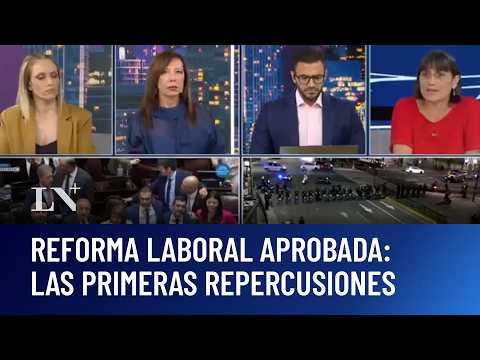
Source material: El Gobierno logró dos nuevos triunfos en el Senado: las primeras repercusiones políticas
Summary
The approval of the judge's report marks a significant step in Argentina's political landscape, indicating a push towards structural reforms aimed at economic modernization. However, public sentiment reflects a demand for more substantial changes, suggesting that the current measures may not fully satisfy the electorate's expectations.
The government is focused on finalizing reforms initiated in December, which are intended to enhance stability and prosperity. Resistance to these reforms stems from a reluctance among workers to adapt to the evolving labor market, highlighting the challenges of implementing effective changes.
Skepticism surrounds the law of modernization, with concerns about its ability to generate employment and improve working conditions. The multifaceted nature of economic growth, influenced by inflation and legislative confidence, complicates the assumption that these reforms will lead to immediate benefits.
The ongoing rupture within the Peronism in the Senate reflects deeper tensions between labor unions and the government. The high rates of informal employment in Argentina raise questions about the effectiveness of proposed reforms and their potential to address existing economic disparities.
Perspectives
Analysis of political reforms and labor laws in Argentina.
Pro-Reform
- Advocates for structural reforms to modernize the economy
- Claims that reforms will enhance stability and prosperity
- Highlights the necessity of adapting labor laws to technological changes
- Proposes that formalization of employment will improve workers rights
- Argues that the law of modernization aims to address informal employment
Anti-Reform
- Questions the effectiveness of the law of modernization in generating employment
- Denies that the current reforms adequately address workers rights
- Accuses the government of prioritizing employer interests over employee protections
- Highlights the risks of increased informal employment due to inadequate reforms
- Critiques the disconnect between political leaders and public sentiment
Neutral / Shared
- Acknowledges the complexity of labor market adaptation
- Recognizes the historical context of labor laws in Argentina
- Notes the importance of public sentiment in shaping political discourse
Metrics
other
50%
percentage of workers outside existing agreements
This indicates significant resistance to reform among the workforce.
we have the 50% of the workers working outside of these agreements.
employment
the law of modernization will not generate employment
effectiveness of the law of modernization
This skepticism highlights potential shortcomings in the law's design.
the law of modernization will not generate employment
inflation
I need to lower inflation
economic conditions affecting labor market
High inflation could undermine the law's intended benefits.
I need to lower inflation
reforms
we have to continue to do reforms
ongoing need for economic reforms
Continued reforms are essential for achieving economic stability.
we have to continue to do reforms
employment
4 of every 10 people work black %
informal employment rate
This statistic underscores the scale of informal labor in Argentina, impacting economic stability.
4 of every 10 people work black
cost
51%
cost associated with employing workers
High employment costs can deter businesses from hiring, impacting overall employment rates.
an employee, an employee, costs twice, let's say. 51%.
disparity
number of workers who come to trial is very low
comparison of workers pursuing legal action to the overall workforce
A low number of trials indicates a lack of access to justice for many employees.
the number of people who come to trial is very low in relation to the number of workers who don't make a mistake.
indemnification
3 million pesos ARS
initial indemnification amount
This figure illustrates the starting point for legal claims under the new law.
a sentence of indemnization of 3 million pesos
Key entities
Timeline highlights
00:00–05:00
The judge's report was approved, indicating progress in Argentina's political landscape. This approval paves the way for anticipated structural reforms aimed at economic modernization.
- The judges report was approved, marking a significant step in the ongoing political developments in Argentina. This approval set the stage for further discussions
- Carla reported that President Javier Milei tweeted about the importance of labor freedom. This tweet reflects the governments focus on modernization and structural reforms
- Manuel Adorno highlighted three structural reforms expected within 48 hours. He emphasized employment flexibility, justice, and trade prosperity, suggesting a push for significant changes in the Argentine economy
- Public sentiment is shifting, with many citizens demanding more substantial reforms. The current labor reform is seen as a starting point, but many believe it is insufficient
- The recent vote in the Senate resulted in 42 votes for and 27 against, with two abstentions. This outcome was anticipated, given the previous voting patterns observed in February
- Some senators faced dilemmas regarding their votes, particularly those from Santa Cruz. Their decisions were influenced by the political climate and the implications of their votes on the reform
05:00–10:00
The government is working to finalize reforms initiated on December 10th, aiming to enhance stability and prosperity. Resistance to these reforms arises from a reluctance among workers to adapt to changes in the labor market.
- The government aims to finalize reforms initiated on December 10th. These reforms are expected to bring stability and prosperity to the people
- Resistance to the reform stemmed from a reluctance to adapt to changes in the labor market. Many workers preferred existing agreements over new regulations
- Legislation is needed to clarify the nature of work. It is essential to ensure that activities are regulated according to regional conditions
- The goal is to improve formalization in private work. This will ensure that employees receive all corresponding benefits associated with their employment
- Concerns were raised about an article from 1944. Discussions are ongoing about whether it should be revisited for a more comprehensive consensus
- The senator emphasized the importance of having a stable law. Such a law would allow decision-makers to trust it, encouraging investment and job creation
10:00–15:00
The law of modernization aims to improve working conditions and generate employment in Argentina. However, skepticism remains regarding its effectiveness and the need for additional reforms to foster economic growth.
- The law of modernization aims to improve working conditions and generate employment. However, some economists are skeptical about its effectiveness
- Achieving economic growth requires addressing multiple factors. Inflation and legislative confidence are crucial for the labor market
- The government believes that the new labor law will assist marginalized workers. It aims to create a more formalized job market in Argentina
- There is anticipation regarding the presidents upcoming speech. This speech may outline economic strategies and measures following the approval of the labor reform
- The historical context of labor reforms in Argentina is significant. The events of 2001 are referenced to emphasize the importance of the current changes
- The conversation includes the need for additional reforms, especially in taxation. These reforms are necessary to foster private sector growth and investment confidence
15:00–20:00
The Peronism block in the Senate is experiencing a rupture, with three senators involved in ongoing negotiations between labor unions and the government. Concerns about the informal economy highlight the disparity in earnings, as estimates suggest that four out of every ten workers are employed informally.
- The rupture within the Peronism block in the Senate is evident, with three senators involved in the conflict. This division reflects ongoing negotiations between the CGT and the government, as well as the CTA and various governors
- The current political landscape in Argentina emphasizes the need for greater dialogue, consensus, and federalism. The dynamics of power have shifted, leading to a loss of discipline among political factions
- Concerns were raised about the significant number of workers in the informal economy. Estimates suggest that four out of every ten workers are employed informally, highlighting the disparity in earnings between formal and informal workers
- The approval of the labor reform is viewed critically. Some argue it does not represent true modernization and is part of a long-standing struggle for labor rights rather than a genuine advancement
- The discussion included the impact of economic policies on the working class, particularly regarding precarious employment. There is a call for solutions that protect workers rights instead of diminishing them
- Efforts to mobilize and unite workers in neighborhoods like Mariano Ferrer are underway. These initiatives aim to support the workforce and address the challenges posed by informal labor
20:00–25:00
The introduction of a new regime has compromised workers' rights, favoring employers and limiting protections for employees. Many business owners express concerns about high employment costs, which can reach up to 51%, leading to reluctance in hiring.
- Workers rights have been compromised with the introduction of a new regime that favors employers. This system limits protections for employees
- The commercial sector faces significant challenges. Many business owners express concerns about the high costs associated with employing workers, which can reach up to 51%
- There is a growing sentiment among commercialists that current labor laws do not adequately support their needs. This has led to reluctance in hiring employees
- The issue of labor trials has become contentious. Many workers are hesitant to pursue legal action due to the complexities and potential repercussions involved
- A disparity exists between the number of workers who actually pursue trials and the overall workforce. This indicates a lack of access to justice for many employees
- Lawyers play a significant role in labor disputes. They often incentivize workers to pursue claims, complicating the relationship between employers and employees
25:00–30:00
The modernization of labor laws includes provisions for downloading certificates from digital platforms, which may reduce indemnification costs. However, there are concerns about the adequacy of these reforms for small and medium enterprises and the potential for increased indemnification amounts.
- The modernization of labor laws includes the ability to download certificates from digital platforms. This change could reduce costs associated with indemnification
- The current law establishes a unique index for indemnification. This can significantly increase the amount owed, as seen in a case where a 3 million peso sentence escalated to 50 million pesos
- Marcelo Fernández, president of Sejera, was invited to discuss the historical labor reform. He emphasized the need for a comprehensive approach to its implications for small and medium enterprises
- Concerns were raised about the mortality rate of small and medium enterprises. Many businesses close due to a lack of clientele rather than regulatory issues
- The importance of legal justice in implementing new laws was highlighted. Questions arose about how these laws will be interpreted and enforced in practice
- There is skepticism about whether the proposed legal reforms will adequately address the needs of small and medium enterprises and workers. Calls were made for broader participation in the legislative process