Geopolitic / World
Track global geopolitics, strategic shifts, power competition and worldwide risk signals through structured summaries from curated sources.
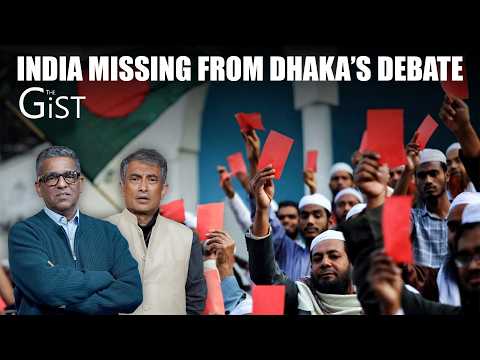
Why Bangladesh’s Election Discourse Barely Mentions India || The Gist
Summary
Bangladesh is experiencing a surge of electoral optimism ahead of the February 12 national polls, with voters hopeful for a free and fair election after years of perceived electoral manipulation. Many first-time voters express excitement, while the political landscape is marked by competition between the BNP and Jamaat, both seeking to capitalize on the Awami League's disqualification from the elections.
India faces a dilemma regarding the rise of the Jamaat, historically wary due to its pro-Pakistan ideology. The party is rebranding and gaining acceptance among various demographics, raising questions about its potential electoral influence and the implications for India-Bangladesh relations.
The Jamaat positions itself as a corruption-free party appealing to the youth, yet skepticism remains about its resonance with the general populace. Concerns from women voters about the party's rise as disempowering could significantly impact the election outcome.
The political climate is shaped by historical events, including the upheaval on August 5 and the murder of a student leader, which may lead to a return to normalcy post-elections. The presence of pro-Pakistan sentiment complicates India's diplomatic strategies, especially with Pakistan's growing influence in various sectors.
Perspectives
Analysis of Bangladesh's electoral landscape and the implications for India.
Jamaat
- Positions itself as a corruption-free party appealing to youth
- Claims to be distinct from the Pakistani Jamaat, seeking local acceptance
- Reaches out to women and young voters to gain support
- Promises to provide a better future for Bangladesh
- Aims to be part of the India growth story if elected
Opposition to Jamaat
- Expresses skepticism about Jamaats appeal to the general populace
- Highlights concerns from women voters regarding Jamaats rise
- Notes the historical pro-Pakistan sentiment associated with Jamaat
- Warns of potential backlash from opposing parties
- Questions the effectiveness of Jamaats rebranding efforts
Neutral / Shared
- Voters express a mix of excitement and cynicism about the upcoming elections
- Indias historical ties with the Awami League complicate its current diplomatic stance
Metrics
influence
18 months since the fifth of August upheaval months
time since significant political upheaval
This timeframe indicates the duration of the Jammat's efforts to increase its influence.
18 months since the fifth of August upheaval in Dhaka or in Bangladesh
candidates
81 of the nearly 2000 candidates units
number of female candidates in the elections
This highlights the limited representation of women in the electoral process.
only 81 of the nearly 2000 candidates in the Freya women.
other
first female prime minister
historical reference to Khaleda Zia
This highlights the potential for unexpected leadership changes in the future.
nobody knew that Kharidazia would become Bangladesh's first I mean first female prime minister
other
5th August 2024
reference to a significant date in political agitation
This date marks a pivotal moment in the political landscape.
on the run up to 5th August 2024
population_percentage
30%
percentage of the population that is women voters
This demographic could significantly influence the election outcome.
30% of the population is between them.
days_until_election
12, 13 days
time remaining until the election
The short timeframe increases the urgency of voter mobilization efforts.
We are about 12, 13 days from the election voting day.
population_support
25 to 30 percent %
pro-Pakistan sentiment among the population
This indicates a significant portion of the electorate may favor pro-Pakistan policies.
at least 25 to 30 percent of the population was always pro-Pagasthan.
new_routes
direct flight to Karachi
new diplomatic and travel routes established
This development raises questions about regional diplomatic relations.
They have just started a direct flight to Karachi.
Key entities
Timeline highlights
00:00–05:00
The BNP and Jamaat are competing for power in the upcoming elections, viewing it as a significant opportunity due to the Awami League's disqualification. There is uncertainty about the election outcome, as neither party can predict the results.
- There is speculation that the BNP and Jamaat, which were once coalition partners, are now competing against each other for power. Both parties see this election as a significant opportunity to gain influence, especially with the Awami League barred from contesting. However, there is uncertainty about the outcome, as neither party can predict the election results
05:00–10:00
India is facing a dilemma regarding the rise of the Jammat in Bangladesh, historically wary due to its pro-Pakistan ideology. The party is rebranding and gaining acceptance among various demographics, raising questions about its potential electoral influence.
- India faces a dilemma regarding the rise of the Jammat in Bangladesh, given its historical stance against the party due to its pro-Pakistan ideology and past actions during the genocide in East Pakistan. Despite this, India has expressed a willingness to work with any government that emerges from legitimate elections, which may force India to engage with the Jammat if it gains power
- There is a noticeable resurgence of the Jammat, which is rebranding itself and reaching out to various demographics in Bangladesh, including the youth and women. This acceptance among the population raises questions about the potential for the Jammat to secure substantial seats in the elections, although the extent of their influence remains uncertain
- The speaker reflects on a personal encounter with a Jammat member, noting that despite the partys controversial history, the individual articulated plans for nation-building and expressed a desire for respectful relations with India. This raises doubts about the public perception of the Jammat and whether their evolving narrative can alter the political landscape in Bangladesh
10:00–15:00
The Jammat positions itself as a corruption-free party appealing to the youth, yet skepticism remains about its resonance with the general populace. There is a perception among elites that foreign diplomats, particularly from the US and Europe, are influencing Bangladesh's political landscape, which contrasts with the common people's focus on immediate living conditions.
- The Jammat claims to be a party for the people, particularly the youth, and asserts that they are not corrupt like the other two parties. However, there is skepticism about whether this narrative resonates with the common people, who are primarily concerned with their living conditions and future security
- There is a perception among the elite in Bangladesh that the US and Western diplomats are actively influencing the political landscape, including backing the Jammat. This influence is not widely acknowledged by the general populace, raising questions about the disconnect between elite analysis and the concerns of ordinary citizens
- Chinas approach in Bangladesh is characterized as more transactional, focusing on commercial interests rather than political involvement. This contrasts with the visible engagement of American and European diplomats, which is resented by some Bangladeshi elites who feel their dignity is compromised by foreign influence in domestic affairs
15:00–20:00
The Jammat organization has stated that they do not foresee a woman leader due to cultural reasons, although there is speculation about future possibilities. Business leaders express mixed feelings about the political climate, indicating that uncertainty could impact their operations despite a desire for a clear government roadmap.
- The Jammat organization has made it clear that they do not foresee a woman leader within their ranks, citing cultural reasons. This assertion raises questions about the role of women in Bangladeshi politics and whether future circumstances might change this stance. The speaker speculates that despite the current limitations, there could be a possibility for a Jammat woman leader to emerge in the future, similar to how Khaleda Zia became the first female prime minister
- There is uncertainty regarding the influence of student leaders who previously participated in political agitation but have now allied with the Jammat. The speaker notes that this coalition may reflect a shift in priorities, as students appear to be aligning with what they perceive as the winning side. The potential for these young leaders to become influential decision-makers in the future is acknowledged, but it remains unclear how effective their coalition will be in the upcoming elections
- Business leaders express mixed feelings about the political climate, indicating apprehension about uncertainty and instability. However, they also suggest that as long as a government provides a clear medium-term roadmap, business operations can continue. This raises doubts about the sustainability of business confidence in the face of political changes and whether the current government will meet these expectations
20:00–25:00
The Jammat faces challenges in gaining traction due to concerns from women voters who may view its rise as disempowering. As the election approaches, the electorate exhibits mixed feelings, with some excitement and others expressing cynicism about the process.
- There is a belief among some businessmen that Jammat will struggle to gain traction due to the influence of women voters, who may view Jammats rise as disempowering. This perspective hinges on the assumption that a significant turnout of women voters could decisively impact the election outcome against Jammat
- Despite the absence of India in the election discourse, there is an acknowledgment that the political landscape has changed, with younger voters less tied to ideological battles. This raises questions about whether the historical anti-India sentiment associated with BNP and Jammat will resurface, given the current context of Indias growing prosperity and influence
- The uncertainty surrounding the undecided voters and their potential impact on the election outcome is palpable. As the election date approaches, the mood among the electorate is mixed, with some expressing excitement while others remain cynical about the process
25:00–30:00
The political climate in Bangladesh is shaped by historical events, including the upheaval on August 5 and the murder of a student leader, which may lead to a return to normalcy post-elections. The presence of pro-Pakistan sentiment complicates India's diplomatic strategies, especially with Pakistan's growing influence in various sectors.
- The current political climate in Bangladesh is influenced by past events, such as the upheaval on August 5 and the murder of a student leader, which have shaped public sentiment and may lead to a return to business as usual post-elections. There is an expectation that cooperation with India will be revisited, but patience is required as the situation evolves
- The presence of pro-Pakistan sentiment among a significant portion of the Bangladeshi population complicates Indias position, especially with Pakistans increasing influence in various sectors, including military and business. The recent establishment of direct flights to Karachi raises questions about diplomatic responses and the feasibility of restricting air rights, indicating a complex international relationship
- India may need to adjust its approach to engage with groups like the Jamat, especially if they gain prominence. The speaker expresses a belief that India has played its cards well but acknowledges the necessity for India to shed old mindsets and consider new realities in its foreign policy, particularly in light of changing dynamics in the region