Geopolitic / World
Track global geopolitics, strategic shifts, power competition and worldwide risk signals through structured summaries from curated sources.
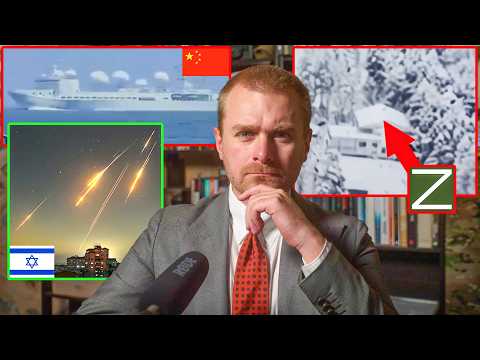
America’s Blind Spot, Preemptive Strikes & Power Vacuums | US - Ukraine War Map & News
Summary
The US is positioning military assets in the Middle East and southern Europe, indicating a potential escalation against Iran. China's involvement in providing intelligence support to Iran raises concerns about US military operations and the implications for US-Israel relations.
Iran is considering preemptive strikes as a viable military strategy, given the current geopolitical tensions. The perception of Israel among younger generations in the US is shifting, with many viewing it as a threat rather than an ally.
There is a growing sentiment in the US questioning military intervention in foreign conflicts, particularly regarding Iran, as many believe it could lead to a costly war without direct benefits. Concurrently, the Russian economy has shown resilience, reportedly achieving better average growth than the Eurozone despite facing numerous Western sanctions.
Concerns are raised about the Western media's influence on narratives surrounding the Russia-Ukraine War, suggesting a lack of objectivity. Speculation about a political shift in Ukraine indicates potential instability in leadership, particularly between President Zelensky and his rival Zeluzni.
Perspectives
Analysis of geopolitical tensions and media influence.
Pro-Iran and Anti-Intervention
- Argues that preemptive strikes by Iran are justified given perceived threats
- Highlights the shifting perception of Israel among younger Americans
- Questions the rationale behind US military intervention in Iran
- Claims that the US political class has a blind spot regarding Israels influence
Pro-Israel and Supportive of US Intervention
- Claims that US military presence is necessary to counter Iranian aggression
- Argues that Israels security is paramount and requires preemptive measures
- Highlights the importance of maintaining US credibility in international relations
- Advocates for continued support of Ukraine against Russian aggression
Neutral / Shared
- Notes the complexities of international military dynamics
- Acknowledges the resilience of the Russian economy despite sanctions
- Observes the potential for political shifts in Ukraines leadership
Metrics
other
large fleets of ships, including parts of Russia's, quote, shadow fleet units
ships moving oil from Iran to China
This indicates strategic preparations in response to potential regional disruptions.
there are large fleets of ships, including parts of Russia's, quote, shadow fleet, moving oil currently from Iran to China
other
the prerequisites for preemptive strikes have absolutely been met
Iran's military strategy
This indicates a significant shift in Iran's military posture.
the prerequisites for preemptive strikes have absolutely been met
other
the majority of people that sit within this are boomers
US political class demographics
This demographic may influence US foreign policy perspectives.
the majority of people that sit within this are boomers
growth
better average growth than the Eurozone
Russian economic performance compared to the Eurozone
Indicates resilience in the face of sanctions.
Russia reported better average growth than the Eurozone over the past four years, despite being hit by some 24,000 Western sanctions.
discount
$20 per barrel discount per Russian oil USD
Impact on Russian oil pricing
Affects revenue and economic stability.
$20 per barrel discount per Russian oil, and taking their toll.
consumer_spending
growth fell to zero in February for the first time in two years %
Consumer spending trends in Russia
Indicates potential economic challenges ahead.
overall consumer spending, growth fell to zero in February for the first time in two years.
growth
4.9% in 24
projected growth rate
Indicates optimistic economic forecasts despite challenges.
4.9% in 24
growth
0.8% growth in 2026
future growth projection
Suggests a significant slowdown in economic growth.
0.8% growth in 2026
Key entities
Timeline highlights
00:00–05:00
The US is positioning military assets in the Middle East and southern Europe, indicating a potential escalation against Iran. China's involvement in providing intelligence support to Iran raises concerns about US military operations and the implications for US-Israel relations.
- The US appears to be positioning assets in the Middle East and southern Europe for potential large-scale attacks against Iran, indicating a significant escalation in military readiness. This raises questions about the implications for US-Israel relations, which may become increasingly strained as the situation develops
- China is reportedly assisting Iran by providing intelligence surveillance and real-time tracking capabilities, which could expose US military movements. However, there is uncertainty regarding the extent of this support, with doubts about whether China is actually providing real-time targeting data or merely collecting intelligence on US assets
- The standard set in Ukraine regarding intelligence sharing and reconnaissance may influence future military actions, but there are concerns about the legality and consequences of targeting assets like satellites. The potential closure of the Strait of Hormuz is a critical point of interest for China, as it affects their oil supply, suggesting that strategic considerations may drive future actions in the region
05:00–10:00
Iran is considering preemptive strikes as a viable military strategy, given the current geopolitical tensions. The perception of Israel among younger generations in the US is shifting, with many viewing it as a threat rather than an ally.
- The prerequisites for preemptive strikes by Iran appear to have been met, suggesting that Tehran may consider this as a viable military strategy. The speaker asserts that Irans primary power lies in its first strike capabilities, which could be significantly more effective if executed preemptively rather than in response to an attack
- There is a belief that the American political credibility and legitimacy are blind spots in the current geopolitical landscape. The speaker questions why US leaders, particularly from the boomer generation, fail to recognize the shifting perceptions of Israel among younger generations, who increasingly view Israel as a threat rather than an ally
- The speaker speculates that the current unrest and social media discourse indicate a growing divide in how different generations perceive Israels role in American politics. It is suggested that while American politicians may be unaware of this shift, Israel itself may have a better understanding of the changing sentiments
10:00–15:00
There is a growing sentiment in the US questioning military intervention in foreign conflicts, particularly regarding Iran, as many believe it could lead to a costly war without direct benefits. Concurrently, the Russian economy has shown resilience, reportedly achieving better average growth than the Eurozone despite facing numerous Western sanctions.
- There is a growing sentiment questioning Americas intervention in foreign conflicts, particularly in Iran, as many believe it could lead to a long, costly war that does not directly benefit the U.S. This raises doubts about the rationale behind such actions, especially when domestic issues are pressing
- The younger generation appears to be increasingly discontent with Americas relationship with Israel, suggesting a desire for greater sovereignty and a focus on domestic issues rather than acting as a proxy for foreign powers. This shift in perspective may challenge the current political landscape and the credibility of the Republican Party
- The Russian economy has shown resilience, reportedly achieving better average growth than the Eurozone despite facing numerous Western sanctions. However, there are concerns about high interest rates, rising prices, and a significant discount on Russian oil, which could impact consumer spending and overall economic growth moving forward
15:00–20:00
Russian sources assert that the economy is performing well despite challenges, dismissing claims of imminent collapse. The impact of rising inflation and interest rates is leading to increased consumer caution and potential business failures, particularly in the restaurant sector.
- Russian sources claim that despite certain economic problems, the economy is performing remarkably well, dismissing suggestions of a demise as premature. This assertion raises questions about the actual state of the economy and whether the reported issues are being downplayed. The belief that restaurant closures in major cities will not deter Putin from his ideological goals suggests a strong commitment to his current course
- There is speculation that the economic downturn may lead to more failed businesses, particularly in the restaurant sector, as consumers prioritize essential spending over dining out. The mention of rising interest costs and inflation indicates a broader economic strain that could impact consumer behavior. This could result in a shift in how people allocate their budgets, potentially leading to further closures in non-essential sectors
- The discussion around the Russian economys opacity raises doubts about the accuracy of available data and the true economic conditions. The central banks recent rate cut and the focus on restoring growth suggest a recognition of underlying economic challenges. However, the complexities of the situation make it difficult to fully grasp the implications of these measures on the overall economy
20:00–25:00
The situation around Svyat the Hursk and the Pockelovsk front is critical for understanding the long-term involvement in the conflict. The presence of a Russian flag being raised indicates significant developments, though the extent of control remains uncertain.
- The discussion indicates that the situation around Svyat the Hursk and the Pockelovsk front is critical for understanding the long-term involvement in the conflict. The presence of a Russian flag being raised suggests a significant development in the area, although there are doubts about the extent of infiltration and control in the closed territories
- There are indications that the Russians are making ground around the Deep Rover area, but the exact movements are unclear. The speaker expresses uncertainty about the accuracy of the maps being used, particularly regarding the advancements reported by different sources, which complicates the understanding of the current front line dynamics
- The potential for elections in Ukraine is a topic of discussion, with various leaders expressing differing views on the implications. There is speculation about whether these elections would lead to a new leader more amenable to negotiations or if they would serve to re-implement democracy, raising questions about the motivations behind these political maneuvers
25:00–30:00
Concerns are raised about the Western media's influence on narratives surrounding the Russia-Ukraine War, suggesting a lack of objectivity. Speculation about a political shift in Ukraine indicates potential instability in leadership, particularly between President Zelensky and his rival Zeluzni.
- The discussion raises concerns about the Western medias role in shaping narratives around the Russia - Ukraine War, suggesting that they may be acting in concert with intelligence operations rather than in good faith. This assertion implies a belief that media outlets are not providing objective reporting, but rather are influencing public perception to serve larger geopolitical agendas
- There is speculation regarding a potential political shift in Ukraine, with the possibility of replacing President Zelensky with his rival, Zeluzni, who is perceived as more popular among the public. The mention of a rift between Zelensky and Zeluzni, along with allegations of intimidation from the SBU, raises doubts about the stability of Zelenskys leadership and the implications for national unity during the ongoing conflict
- The speaker expresses uncertainty about the military strategies being employed in Ukraine, suggesting that political influences may be undermining sound military doctrine. This raises questions about the effectiveness of the current leadership and the potential for internal conflict, drawing parallels to the Vagner PMC mutiny in Russia as a possible outcome of escalating tensions within the Ukrainian military hierarchy