Geopolitic / World
Track global geopolitics, strategic shifts, power competition and worldwide risk signals through structured summaries from curated sources.
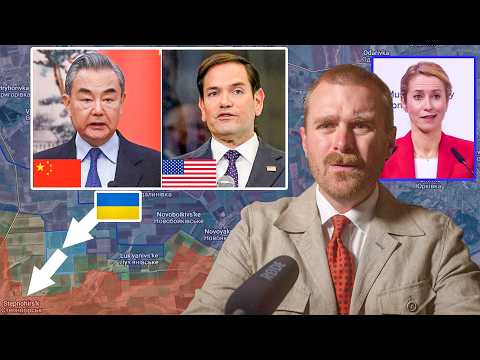
Stretched Thin | Munich Exposes a Shifting World Order - EU Delusion, US Isolation | Ukraine Map
Summary
Maps have regained importance in discussions about the Russia-Ukraine War as Ukraine reportedly makes territorial gains. The Munich Security Conference is anticipated to reveal the positions of global powers, particularly the US and China. Conflicting claims among mappers suggest that maps may be overestimating territorial gains due to operational security concerns, complicating the understanding of the conflict's dynamics.
Zelensky has proposed a two-month ceasefire to facilitate elections in Ukraine, which is viewed as unlikely to occur. Frustrations mount over Europe's lack of serious action against Russia, with Zelensky's comments highlighting the disparity between Europe's rhetoric and its actual response to the war. The reliance on unverified claims of territorial control raises questions about the accuracy of the information being presented.
The critiques the perception of Russia as a significant threat despite its economic struggles and high casualty rates. They argue that if Russia's military capabilities are limited, then Ukraine's should be as well, questioning the feasibility of such limitations. Leaders appear disconnected from the consequences of the Russia-Ukraine War, raising concerns about their awareness of global dynamics.
The current geopolitical landscape is shaped by a delusion that liberal democracy will universally prevail, which has led to subjective application of rules by the US. This has resulted in the outsourcing of sovereignty and industrial capabilities, raising concerns about national defense among various nations. The monopolization of global power by a few countries highlights the need for true multilateralism and greater democracy in international relations.
Perspectives
Analysis of the Russia-Ukraine War and its implications on global power dynamics.
Pro-Ukraine
- Highlights Ukraines territorial gains and the importance of maps in the conflict
- Proposes a ceasefire to facilitate elections in Ukraine
- Critiques Europes lack of serious action against Russia
Pro-Russia
- Questions the perception of Russia as a significant threat despite its struggles
- Argues that Russias military capabilities should be limited alongside Ukraines
- Critiques the USs subjective application of international rules
Neutral / Shared
- Notes the complexities of territorial claims and the reliability of mapping sources
- Raises concerns about the disconnect of leaders from the wars consequences
- Emphasizes the need for multilateralism in international relations
Metrics
territory
53 squared kilometers sq km
territorial advancements by Ukrainian forces
This indicates significant progress in reclaiming territory.
they've had large advancements in the vicinity of around 53 squared kilometers on this front.
other
grey zone increase around the Gulliapol way front
indicates uncertainty in territorial control
This suggests ongoing conflict and potential shifts in control.
there's a lot of argument at the moment between Mappers.
other
limited resources in anticipation of a larger offensive
reflects strategic military planning
This indicates a potential escalation in military actions.
does Ukraine need to move limited resource in case that does?
other
two months
proposed ceasefire duration
A longer ceasefire could impact the political landscape in Ukraine.
give us two months of ceasefire
other
24 hours
Russian response to ceasefire proposal
This indicates a significant difference in expectations for electoral processes.
we'll give you 24 hours on the voting day
other
over 10 million people
Ukrainians who have fled Ukraine
This figure underscores the humanitarian crisis resulting from the conflict.
there are well over 10 million Ukrainians who have fled Ukraine.
casualties
1.2 million units
total casualties in the conflict
This figure highlights the severe human cost of the ongoing conflict.
the cost, 1.2 million casualties.
military_buildup
the biggest conventional military buildup we've seen in the world since the end of the Second World War units
China's military expansion
This indicates a significant shift in global military power dynamics.
the biggest conventional military buildup we've seen in the world since the end of the Second World War
Key entities
Timeline highlights
00:00–05:00
Maps have regained importance in discussions about the Russia-Ukraine War as Ukraine reportedly makes territorial gains. The Munich Security Conference is anticipated to reveal the positions of global powers, particularly the US and China.
- Maps have suddenly regained relevance in discussions about the Russia-Ukraine War, particularly as Ukraine is reportedly making ground. This shift in focus raises questions about the motivations behind the previous neglect of maps, suggesting that they were ignored when they did not align with certain narratives. The speaker implies that the current visibility of maps is tied to Ukraines recent successes on the battlefield
- The Munich Security Conference is expected to provide insights into the positions of various global powers, including the US and China. There is an assumption that the actions of the US are pushing smaller and middle powers closer to China, indicating a potential shift in global alliances. The speaker expresses uncertainty about how these dynamics will unfold, particularly regarding the responses from Europe and other nations
- There are indications that Ukraine has made significant territorial advancements, particularly in the southern and eastern regions. However, there is doubt about the ability of certain sources, like the deep state, to accurately reflect these gains in their reports. The speaker speculates that if the Ukrainian offensive does not continue, the positive narrative surrounding their territorial recovery may not hold
05:00–10:00
Conflicting claims among Mappers suggest that maps like AMK and Suriak may be overestimating territorial gains due to operational security concerns. Uncertainty remains regarding the actual control in regions such as Oleksandrivkia and Susnovas, complicating the understanding of the conflict's dynamics.
- There are conflicting claims among Mappers regarding the advancements shown on maps like AMK and Suriak, with some suggesting that these maps are overestimating ground gained. The assertion is made that operational security (Opsek) is preventing the release of accurate information, leading to confusion about the actual situation on the ground
- The discussion raises the possibility that Ukraine may need to move limited resources in anticipation of a larger offensive, although it is speculated that such an escalation might not occur. The mention of a grey zone around Komodoivkia indicates uncertainty about the extent of control in that area, suggesting that further advancements could be happening but are not fully confirmed
- Doubts are expressed about the depth of control in certain regions, particularly around areas like Oleksandrivkia and Susnovas, where the actual situation may not be accurately represented on maps. The speaker questions whether the current movements in the north will lead to a more significant development, indicating a level of uncertainty about the future dynamics of the conflict
10:00–15:00
There is confirmed movement on the Kupiansk front, but control remains unverified. Zelensky has proposed a two-month ceasefire to facilitate elections in Ukraine, which is viewed as unlikely to occur.
- There is confirmed movement on the Kupiansk front, but control remains unverified. The channel maintains a higher standard for confirming data, indicating a cautious approach to reporting advancements by either side. This suggests a careful balance in assessing the situation on the ground
- Zelensky has proposed a two-month ceasefire to facilitate elections in Ukraine, but this is viewed as unlikely to occur. The response from Russia indicates a willingness to allow only 24 hours for voting, reflecting the ongoing battlefield momentum. This raises questions about the feasibility of a ceasefire and the political implications for Ukraine
- Zelenskys frustration with Europe is growing, particularly towards Hungarys Prime Minister Viktor Orban, who opposes Ukraines EU accession. There is a sense that member states are not prepared to provide a concrete timeline for Ukraines entry into the European Union. This uncertainty may lead to increased tensions and dissatisfaction among those advocating for Ukraines integration into Europe
15:00–20:00
The ongoing situation in Ukraine is increasingly viewed as a European issue, with frustrations mounting over Europe's lack of serious action against Russia. Zelensky's comments highlight the disparity between Europe's rhetoric and its actual response to the war.
- The speaker asserts that both America and Russia seemingly have no say in the ongoing situation, which should provoke more anger as it is fundamentally a European issue. There is a growing frustration regarding the lack of serious action from Europe, particularly in relation to sanctions on Russian nuclear energy and the presence of Russians living in Europe and the US. This frustration is echoed in Zelenskys comments about the disparity between rhetoric and reality in Europes response to the war
- There is speculation about the potential outcomes if Russia is allowed to succeed in Ukraine, suggesting that a pro-Russian government could emerge through a democratic process. This raises doubts about the stability of Ukraines democracy and the long-term implications of such a shift. The speaker emphasizes that the consequences of the invasion will ripple through Europe for a long time, indicating uncertainty about the future political landscape
- The speaker questions the effectiveness of Europes response to Russias maximal demands, suggesting that a minimalist response will not suffice. There is an implication that the current situation may lead to significant costs for European states, both financially and politically. The mention of Kayakalus highlights the perceived imbalance of power between Russia and Europe, raising concerns about the potential for further escalation
20:00–25:00
The speaker critiques the perception of Russia as a significant threat despite its economic struggles and high casualty rates. They argue that if Russia's military capabilities are limited, then Ukraine's should be as well, questioning the feasibility of such limitations.
- The speaker questions the logic behind the perception of Russia as a threat, given its economic struggles and high casualty rates. They assert that if Russias economy is indeed in tatters, it is unclear why there is fear of it gaining more at the negotiation table than it has achieved on the battlefield
- There is skepticism about the effectiveness of Europes response to Russias demands, with the speaker suggesting that a maximalist response is necessary. They imply that if Ukraines military size is to be limited, then Russias should be as well, raising doubts about the feasibility of such limitations based on the outcome of the war
- The speaker expresses uncertainty regarding the likelihood of Russia facing consequences for war crimes or paying reparations, questioning why similar accountability is not pursued for other conflicts. They speculate on the challenges of achieving peace, suggesting that if peace were Russias goal, it should agree to certain terms, yet they doubt that this is the case
25:00–30:00
The current geopolitical landscape is shaped by a delusion that liberal democracy will universally prevail, which has led to subjective application of rules by the US. This has resulted in the outsourcing of sovereignty and industrial capabilities, raising concerns about national defense among various nations.
- The assertion is made that the current geopolitical landscape is influenced by a delusion stemming from the belief that liberal democracy would universally prevail, ignoring historical lessons and human nature. This delusion has led to subjective application of rules by the US, which has rendered them ineffective and has contributed to the outsourcing of sovereignty and industrial capabilities
- There is speculation regarding Germanys military capabilities, questioning whether it can effectively raise a military force despite its economic strength. This uncertainty is compounded by the observation that many nations have prioritized welfare states over defense, potentially compromising their ability to protect themselves
- The discussion raises doubts about Americas willingness to use hard power in pursuit of its interests, especially in light of Chinas significant military and industrial expansion over the past two decades. The comparison of military buildups and industrial growth suggests a need for a more nuanced understanding of the current global power dynamics