Geopolitic / World
Track global geopolitics, strategic shifts, power competition and worldwide risk signals through structured summaries from curated sources.
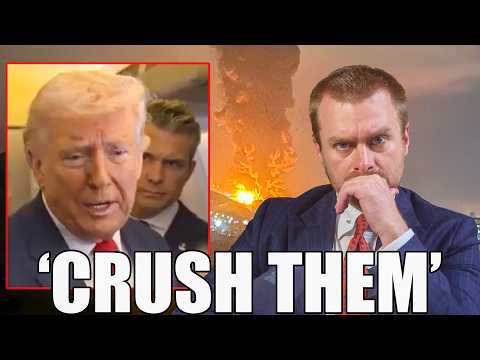
Iran War Strategic Update: Day 9 - US 'Plan' vs Doctrine, History and Data | Evil or Incompetent?
Summary
The U.S. has declared victory in its operations in Iran while simultaneously demanding unconditional surrender from Iranian forces, leading to contradictions in messaging. The interconnectedness of global events, particularly regarding oil prices, is emphasized as geopolitical tensions escalate. The U.S. military presence in the region is increasing, with the deployment of a third aircraft carrier, indicating heightened conflict dynamics.
Crude oil prices have surged due to the conflict, with significant implications for global markets. The targeting of oil depots in Iran has further complicated the situation, as Iran has not systematically targeted Gulf State oil infrastructure. The reliance on Kurdish forces in the region raises concerns about their historical treatment and potential abandonment by U.S. allies.
Trump's narrative regarding the Kurds and Iran is critiqued for fabricating a sense of control that may mislead public perception. The complexities of the situation are highlighted, with Iran's continued influence in the region and the potential for increased civilian casualties due to military actions. The messaging from U.S. officials is seen as contradictory and potentially damaging to strategic objectives.
The conflict is evolving into one driven by ideological and religious motivations, complicating military strategies. The geography of Iran presents significant challenges for conventional military operations, as historical patterns suggest that increased bombing may bolster support for insurgent groups rather than diminish it.
Perspectives
Analysis of U.S. strategy in the Iran conflict.
U.S. Strategy Critique
- Critiques U.S. declarations of victory as contradictory
- Highlights the negative impact of military actions on civilian populations
- Questions the effectiveness of U.S. reliance on Kurdish forces
- Denounces Trumps narrative as misleading and fabricative
U.S. Military Objectives
- Claims that military presence is necessary to stabilize the region
- Argues that targeting oil infrastructure is a strategic necessity
- Poses that U.S. actions are aimed at countering Iranian influence
- Maintains that U.S. strategy is focused on maintaining regional alliances
Neutral / Shared
- Notes the interconnectedness of global events and oil prices
- Acknowledges the complexities of the geopolitical landscape
- Recognizes the historical context of U.S. military engagements
Metrics
oil_price
about $56 USD
price per barrel of oil required by Russia
This price point is critical for Russia's economic stability amidst sanctions.
We know that Russia requires a barrel, price per barrel of oil of about $56 on Ural's crude.
historical_loss
first time Iran has ever lost in a thousand years
Iran's historical military performance
This highlights the significance of Iran's resilience in regional conflicts.
the first time Iran has ever lost in a thousand years to surrounding Middle East country.
civilian casualties
many, many young schoolgirls died individuals
civilian casualties from bombing campaigns
This highlights the severe humanitarian impact of military operations.
many, many young schoolgirls died
population
90 plus million people in Iran individuals
total population of Iran
The scale of potential humanitarian crises is significant.
90 plus million people in Iran
military_strategy
targeting civilians is a war crime
the implications of military actions in civilian areas
Targeting civilians can lead to increased resistance and insurgency.
targeting civilians is a war crime
geography
massive, mountainous, tunneled
Iran's geographical advantages in defense
The terrain limits the effectiveness of larger military forces.
It's massive. It's mountainous. It's tunneled.
success_rate
8 out of 30 COIN cases %
success rate of counterinsurgency operations
This low success rate highlights the challenges faced in military interventions.
Every coin win in the data, eight of 30 cases.
collateral_damage
perceived by the population in the area of conflict as worse than the insurgents
public perception of COIN force actions
Negative perception can lead to increased support for insurgents.
the COIN force collateral damage was perceived by the population in the area of conflict as worse than the insurgents.
Key entities
Timeline highlights
00:00–05:00
The US has declared victory in its operation in Iran while simultaneously demanding unconditional surrender from Iranian forces, leading to apparent contradictions among officials. The interconnectedness of global events is emphasized, particularly regarding the impact on oil prices.
- The US has declared victory in the operation in Iran while demanding unconditional surrender, creating contradictions that suggest cognitive dissonance among officials
- The speaker emphasizes the interconnectedness of international events, noting that actions in one area can significantly impact global oil prices
- There is considerable shadow banning on social media affecting independent creators who do not align with mainstream narratives, prompting a call for viewer support
- The discussion will analyze the doctrine of insurgency warfare and the role of strategic communication in shaping public perception
05:00–10:00
Crude oil prices have increased by 12% to $91 a barrel due to geopolitical tensions, while Ural's crude was last reported at $72. The US is escalating its military presence in the region by deploying a third aircraft carrier, indicating heightened conflict dynamics.
- Crude oil prices have surged to $91 a barrel, marking a 12% increase in just one day due to ongoing geopolitical tensions. The last update for Urals crude was on March 5th, showing a price of $72, which is significant as the Russian budget relies on a price of around $56 per barrel
- Israel and the US have targeted four oil depots around Tehran, further reducing supply. Iran has not systematically targeted Gulf State oil and gas infrastructure, focusing instead on US facilities
- The strikes on oil depots and the Iranian naval ship set a precedent for future conflicts, indicating that states can provide significant military support without being considered a party to the conflict
- The US is deploying a third aircraft carrier, the George HW Bush, to the region, joining the USS Gerald R Ford and the Abraham Lincoln, indicating an escalation in military presence
- There is a reliance on Kurdish forces within Iran and Iraq to potentially support a US invasion. However, historical patterns show that the Kurds have often been supported and then abandoned, leading to dire consequences
10:00–15:00
Trump has ruled out Kurdish involvement in the conflict in Iran, despite their willingness to participate. The speaker critiques Trump's narrative, highlighting the complexities of the situation and Iran's continued influence in the region.
- Trump has stated that the Kurds will not be involved in the conflict in Iran, despite their willingness to participate. He emphasizes avoiding further complications in the war
- The speaker critiques Trumps approach, suggesting he projects control while ignoring the complexities of the conflict. This includes a discussion of Trumps tweets and their implications for U.S. military strategy
- Iran has not apologized or surrendered to its neighbors, countering Trumps narrative. Instead, it continues to assert its influence in the region against U.S. interests
- Historically, Iran has not lost a conflict in a thousand years. The conventional military must achieve a decisive victory, while Iran only needs to avoid losing
- The speaker reflects on past military engagements by the U.S. and its allies, noting that while they may not have lost battles, they ultimately lost the wars. This highlights a disconnect between military success and strategic objectives
- Trumps messaging fabricates narratives that align with authority figures, complicating the truth and influencing public perception. This tactic is exemplified by his claims regarding discussions with Putin about the 2020 election
15:00–20:00
The IRGC and Iranian forces are increasingly motivated to resist due to the dire consequences of failure, including potential destruction. The Israeli government's strategy appears focused on creating chaos in Iran, contrasting sharply with the US's stated interest in regional stability.
- The IRGC and Iranian forces are motivated to fight due to the potential consequences of failure, which includes complete destruction and collapse. This messaging galvanizes public resistance against external threats
- Israel and US proxies are reportedly engaging in extensive bombing campaigns in Tehran, leading to significant civilian casualties, including the deaths of schoolgirls. This raises concerns about the targeting of previously unconsidered groups and resources
- The classification of protesters as combatants could lead to further strikes against civilians, complicating the already dire situation in Iran. This potential shift in targeting strategy is alarming
- The Israeli governments strategy appears indifferent to the stability of Iran, focusing instead on creating chaos and civil unrest. This contrasts with the USs purported interest in nation-building and regional stability
- The Israeli position suggests a willingness to see Iran in turmoil, regardless of the humanitarian impact, as long as it eliminates Iran as a regional threat. This reflects a broader disregard for the consequences of military operations on US credibility and international relations
- The speaker references a working document by Christopher Paul and Colin P. Clark, indicating a need to analyze the complexities of victory in military operations. This suggests an ongoing evaluation of strategies and outcomes in the context of the current conflict
20:00–25:00
The conflict in Iran is evolving into one driven by ideological and religious motivations, complicating military strategies. The geography of Iran, characterized by mountainous terrain, poses significant challenges for conventional military operations.
- The speaker critiques the notion that the conflict in Iran is a classic insurgency, arguing it will evolve into one fueled by ideological and religious motivations. This shift complicates military strategy and highlights the diverse motivations of various groups involved
- Henry Kissingers insights emphasize that a reputation for reliability is crucial for the US in its relationships with allies like the Kurds and Ukrainians. The speaker argues that the USs reliability is currently in question, which could have significant implications for international relations
- The geography of Iran presents a significant advantage for its defense, with its mountainous terrain making it difficult for larger states to exert control. This geographical complexity limits the effectiveness of conventional military strategies against Iran
- The speaker warns that targeting civilians in military operations can backfire, turning the local populace against the invaders and driving them towards insurgent groups. This dynamic is illustrated by current military actions in Tehran, which may create more resistance rather than suppress it
25:00–30:00
The reliance on air power in military operations often signifies strategic failure, particularly when confronting insurgencies. Historical examples illustrate that increased bombing can inadvertently bolster support for the targeted groups, complicating military objectives.
- Reliance on air power has historically indicated strategic failure, as seen in the Wests challenges against lightly armed insurgents like the Taliban. This highlights the limitations of conventional military power, especially when negotiating with groups lacking significant military resources
- The bombing campaigns of World War II show that increased bombing can inadvertently strengthen support for the targeted military, a trend observable in Iran and Russia today. This suggests that conventional strategies may falter against unconventional insurgencies, necessitating alternative approaches
- Successful counterinsurgency operations require a balance of good practices, as only 8 out of 30 COIN cases have resulted in a win. Maintaining legitimacy, ensuring adequate intelligence, and minimizing collateral damage are essential for gaining local support and operational effectiveness