Geopolitic / Europe
Military's Role in Modern Civil Defense
Over the past decade, there has been a notable change in how the military's role in civil defense is perceived, especially in Germany, where such discussions were once considered taboo. Lieutenant General Alexander Sollfrank highlighted the formation of the Joint Force Command in Germany, which merges homeland defense with operational command to better tackle current security challenges.
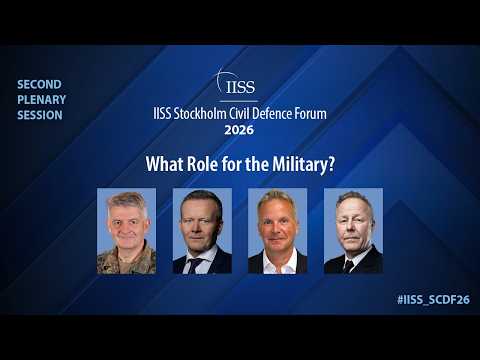
Source material: Second Plenary Session | What Role for the Military?
Summary
Over the past decade, there has been a notable change in how the military's role in civil defense is perceived, especially in Germany, where such discussions were once considered taboo. Lieutenant General Alexander Sollfrank highlighted the formation of the Joint Force Command in Germany, which merges homeland defense with operational command to better tackle current security challenges.
Panelists identified Russia as a significant threat, employing military force and hybrid tactics like espionage and cyber attacks to undermine stability in Europe. The rise in sabotage and cyber incidents is linked to Russian activities, emphasizing the urgent need for improved civil-military collaboration to counter these threats.
Major General Mikael Frisell highlighted Sweden's total defense strategy, which combines military and civil defense to prepare for potential wartime scenarios. The total defense approach involves a whole-of-society effort, engaging government, private sectors, and civil society to foster collective responsibility for national security.
Finland's security model focuses on protecting essential societal functions through collaboration among various sectors, identifying seven interdependent functions including internal security and defense capabilities. The national risk assessment outlines 21 potential threats, with only one directly linked to military force, reflecting a comprehensive all-hazard approach to crisis management.
Perspectives
Analysis of the evolving role of military organizations in civil defense, emphasizing the need for enhanced civil-military cooperation.
Proponents of Military Involvement in Civil Defense
- Argue that military collaboration is essential for national resilience against modern threats
- Highlight the need for integrated planning between military and civilian sectors to ensure effective crisis response
Skeptics of Military Dominance in Civil Defense
- Question the effectiveness of military strategies without addressing public perception and trust
Neutral / Shared
- Acknowledge the evolving nature of threats necessitating a re-evaluation of civil defense strategies
- Recognize the importance of joint training and information sharing between military and civilian entities
Metrics
other
10 years ago
timeframe for military discussions in Germany
This highlights the significant shift in military-civil relations over the past decade
10 years ago, we would not have had this conference.
other
April 2025
inauguration of the Joint Force Command
Marks a pivotal moment in Germany's military restructuring
this command has been stood up and inaugurated in April 2025
other
21 threats
total potential threats identified in the national risk assessment
Understanding the range of threats is crucial for effective crisis management
we have identified all in all 21 threats and areas in our national risk assessment.
other
56 tasks
total strategic tasks identified for crisis preparedness and response
A clear understanding of these tasks is essential for effective crisis management
we have identified 56 strategic tasks.
other
over 10 billions of US dollars USD
military support to Ukraine
This support is seen as vital for Sweden's own security
over 10 billions of US dollars so far
other
90-10 concept %
proportion of society addressed by military versus common planning
This highlights the significant role of civilian engagement in defense planning
10% over the Swedish society, the actors, needs to be addressed directly from the military port.
other
two or 56 staff units
staff related to protect or handling organized crime and maintaining public order
This indicates the scale of police involvement in internal security
they have responsibility of a two or 56 staff related to protect or handling organized crime and maintaining public order.
Key entities
Timeline highlights
00:00–05:00
The military's role in civil defense has evolved significantly over the past decade, particularly in Germany, where discussions were once taboo. Current security challenges, especially from Russia, necessitate improved civil-military collaboration to address threats like espionage and cyber attacks.
- Over the past decade, there has been a notable change in how the militarys role in civil defense is perceived, especially in Germany, where such discussions were once considered taboo
- Lieutenant General Alexander Sollfrank highlighted the formation of the Joint Force Command in Germany, which merges homeland defense with operational command to better tackle current security challenges
- Panelists identified Russia as a significant threat, employing military force and hybrid tactics like espionage and cyber attacks to undermine stability in Europe
- The rise in sabotage and cyber incidents is linked to Russian activities, emphasizing the urgent need for improved civil-military collaboration to counter these threats
05:00–10:00
The military's role in civil defense has become increasingly vital as threats from Russia evolve, particularly regarding German industries. Enhanced civil-military cooperation is essential for effective national resilience and defense strategies.
- Russias strategy now includes targeting German industries that support Ukraine, reflecting a shift in the threats faced by NATO countries
- Although a large-scale attack on NATO is currently considered unlikely, the potential for regional attacks necessitates ongoing preparedness and vigilance
- Germany has transitioned from a frontline state during the Cold War to a key hub for NATO reinforcements, underscoring its strategic importance in crisis response
- The operational plan integrates military and civilian efforts to enhance defense and support for NATO operations, highlighting the need for close intersectoral coordination
- Military readiness is essential for national resilience, requiring collaboration with civilian entities to strengthen overall defense capabilities
10:00–15:00
The discussion focused on the evolving role of military organizations in civil defense, particularly in response to modern threats. Emphasis was placed on the necessity of civil-military cooperation to enhance national resilience and protect critical infrastructure.
- Major General Mikael Frisell highlights Swedens total defense strategy, which combines military and civil defense to prepare for potential wartime scenarios
- The total defense approach involves a whole-of-society effort, engaging government, private sectors, and civil society to foster collective responsibility for national security
- Ongoing conflicts, especially Russias invasion of Ukraine, underscore the need for robust protection of civilian infrastructure, including hospitals and critical services
- Sweden is shifting focus from peacetime crisis preparedness to wartime civil defense, driven by strong political will and increased security investments
- Frisells agency is pivotal in coordinating civil defense initiatives and collaborating with military forces to bolster national resilience against emerging threats
15:00–20:00
The discussion highlighted the evolving role of military organizations in civil defense, emphasizing the need for enhanced civil-military cooperation. Sweden's comprehensive framework for civil defense includes 12 prepared sectors and six civil defense regions to ensure national resilience.
- Swedens civil defense strategy adopts a whole-of-society approach, necessitating collaboration among government, private sectors, and military to prepare for potential conflicts
- The Swedish Civil Defense and Resilience Agency has developed a comprehensive framework with 12 prepared sectors and six civil defense regions to improve coordination and planning for total defense
- Total defense planning includes scenarios that ensure both military and civil defense can sustain critical societal functions during prolonged conflicts
- Sweden is enhancing regional security through joint civil-military planning with Finland and other Nordic nations, focusing on population movement and stockpiling strategies
- The push to modernize civil defense in Sweden is fueled by strong political commitment and increased security investments, marking a transition from peacetime to wartime readiness
20:00–25:00
The discussion emphasized the importance of civil-military cooperation in enhancing national resilience against evolving threats. Finland's security model integrates various sectors to protect essential societal functions while limiting military involvement to specific scenarios.
- Finlands security model focuses on protecting essential societal functions through collaboration among various sectors, identifying seven interdependent functions including internal security and defense capabilities
- The national risk assessment outlines 21 potential threats, with only one directly linked to military force, reflecting a comprehensive all-hazard approach to crisis management
- Crisis preparedness and response are organized around 56 strategic tasks, primarily aimed at civilian protection and maintaining essential services, with military involvement limited to specific scenarios
- Effective security activities rely on the integration of public, private, and civil society sectors, positioning the military as one of many contributors rather than the central focus
- For the past 80 years, Finnish military capabilities have mainly supported civilian efforts during crises, including responses to the COVID pandemic and natural disasters
25:00–30:00
The discussion focused on the evolving role of military organizations in civil defense, emphasizing the need for enhanced civil-military cooperation. The current security landscape features hybrid threats, necessitating collaboration between military and civil sectors to maintain societal functions.
- The Finnish militarys evolving role focuses on supporting civil authorities during crises, as mandated by legislation that prioritizes military assistance when local resources are inadequate
- Geopolitical shifts, particularly the war in Ukraine, have increased the emphasis on military readiness and resource allocation across sectors to prepare for potential conflicts
- Swedens defense strategy incorporates total defense, merging military and civil elements to safeguard the nation and its allies, reflecting a realignment with NATO defense planning
- The current security landscape features hybrid threats, such as cyber attacks and assaults on critical infrastructure, highlighting the need for collaboration between military and civil sectors
- Effective civil-military cooperation relies on trust and inclusiveness, essential for both sectors to work together in maintaining societal functions and addressing emerging threats