Geopolitic / Africa
Sudan's civil war and humanitarian crisis
Sudan has endured three years of civil war, resulting in significant humanitarian crises and the displacement of 14 million people. The conflict involves two primary factions: the Sudanese armed forces led by General Abdul-Khattah el-Burhan and the paramilitary rapid support forces commanded by General Muhammad Hamdantaga.
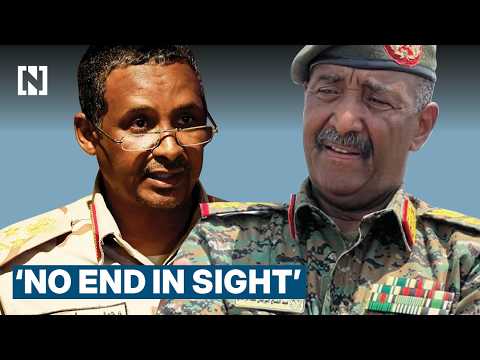
Source material: Sudan's devastating civil war passes three-year point
Summary
Sudan has endured three years of civil war, resulting in significant humanitarian crises and the displacement of 14 million people. The conflict involves two primary factions: the Sudanese armed forces led by General Abdul-Khattah el-Burhan and the paramilitary rapid support forces commanded by General Muhammad Hamdantaga.
Attempts to establish a ceasefire have repeatedly failed, with mediators emphasizing the need for a political solution rather than a military one. An international conference in Berlin aimed to address the situation, but expectations for meaningful progress remain low.
The war's impact has expanded geographically, with violence now affecting regions such as Darfur and Kordofan. The conflict has evolved in nature, incorporating modern warfare tactics like drone strikes and air assaults, leading to widespread devastation.
Accusations of war crimes and crimes against humanity have been levied against both factions, with the UN highlighting the severity of the situation in Darfur. The humanitarian toll is immense, with 21 million people facing acute food insecurity and hospitals overwhelmed by casualties.
Perspectives
short
Sudanese Armed Forces
- Accused of using chemical weapons against civilians
- Controls the capital and significant parts of central Sudan
- Engages in warfare that has led to widespread chaos and violence
Rapid Support Forces
- Accused of committing acts that amount to genocide in Darfur
- Controls the entire western Darfur region and parts of Kordofan
- Utilizes modern warfare tactics, including drone strikes
Neutral / Shared
- Both sides have been implicated in war crimes
- Humanitarian crisis affects millions, with hospitals overwhelmed
- International mediation efforts have so far failed to yield results
Metrics
displacement
14 million people
number of people displaced due to the civil war
This figure underscores the scale of the humanitarian crisis in Sudan.
14 million people displaced.
food insecurity
21 million people
number of people facing acute food insecurity
This statistic highlights the dire humanitarian conditions affecting millions.
21 million people face acute food insecurity.
Key entities
Timeline highlights
00:00–05:00
Sudan has been in civil war for three years, resulting in the displacement of 14 million people due to conflict between rival military factions. The humanitarian crisis is severe, with 21 million people facing acute food insecurity and overwhelmed hospitals.
- Sudans civil war has lasted three years, displacing 14 million people due to conflict between the armed forces and paramilitary groups led by rival generals
- Repeated failures to establish a ceasefire emphasize the necessity for a political resolution and international support for civilian governance
- An international conference in Berlin marks the wars third anniversary, but expectations for meaningful outcomes are low, despite the potential inclusion of civilian representatives
- The conflict has spread violence to regions like Darfur and Kordofan, with new tactics such as drones and air strikes increasing civilian casualties and infrastructure damage
- The humanitarian crisis is dire, with 21 million people facing severe food insecurity and hospitals overwhelmed by casualties, contributing to one of the largest displacement crises globally
- External powers are competing for influence in the conflict, while the rise of hard-line Islamist factions within military and militia groups threatens regional stability