Finance / kitco_news
Curated signals and summaries. Topic: Kitco-News. Updated briefs and structured summaries from curated sources.

The 'Everything Bubble' Has Popped: Why Stocks Will Fall 50% In The Next Few Months - Harry Dent
Summary
Gold is currently trading around the $4,400 range after a significant drop from its recent highs, despite ongoing geopolitical tensions in the Middle East. This decline raises questions about investor confidence in gold …
Instruments
Timeline highlights
00:00–05:00
- Gold is currently trading around the $4,400 range after a significant drop from its recent highs, despite ongoing geopolitical tensions in the Middle East. This decline raises questions about investor confidence in gold as a safe haven asset.
- Major private credit funds, including those tied to Apollo and AirAs, have capped investor withdrawals following a surge in redemption requests, indicating stress in the private credit market. This situation reflects broader concerns about liquidity and market stability.
- The US Treasury market is experiencing a decline, with weak demand observed at a recent $69 billion two-year auction. Investors are increasingly worried that prolonged conflict in the Middle East and rising oil prices could reignite inflation, leading to tighter monetary policy from the Federal Reserve.
05:00–10:00
- Gold and silver have experienced significant price increases over the last three years, reflecting the extremity of the current everything bubble, which encompasses all major asset classes.
- The current economic environment suggests that the government may be too late to respond to an impending downturn, potentially leading to a rapid recession as the everything bubble begins to burst.
10:00–15:00
- The current economic bubble, fueled by $30 trillion injected over 17 years, is showing signs of strain as Treasury bonds are the only major asset that has declined while other assets like gold and stocks have risen. When the bubble bursts, Treasury bonds are expected to become the safe haven, while gold is likely to decline despite its recent surge.
- The potential for a recession could trigger a significant rise in Treasury bonds, as seen in 2008 when they were the only asset that appreciated during an economic downturn. Investors are advised to consider Treasury bonds or the TLT ETF, which combines 10-year and 30-year bonds, as a strategic move in the current market environment.
- The speaker predicts that the upcoming market shift could be comparable to the stock crash of 1929-32, with potential declines of 80-90% in stock values. This dramatic downturn is expected to create a stark contrast between the performance of Treasury bonds and other assets.
15:00–20:00
- Central banks may become more tactical with their gold reserves in response to economic pressures, potentially mobilizing these assets to support fiat currencies. This shift could indicate a weakness in fiat systems rather than in gold itself, as governments have been accumulating gold as a hedge.
- India is projected to drive significant demand for gold in the long term, as its urbanization increases and its economy grows. Indians currently spend three times more on gold than the Chinese as a percentage of their income, suggesting a cultural affinity that could bolster gold prices.
- Gold is currently viewed as overvalued due to its recent price surge, which is seen as part of a bubble. Predictions indicate that gold prices may need to correct significantly, potentially dropping by 70 to 80 percent before stabilizing at more normal levels.
20:00–25:00
- India is expected to experience significant economic growth, potentially surpassing China in wealth as its urban population increases from 30% to 80%. This shift could lead to a substantial rise in demand for gold and silver among Indian consumers.
- The upcoming market crash is anticipated to be severe, with stocks potentially dropping 40 to 50% within two to four months. Investors who delay selling in hopes of further gains may face the most significant losses during this initial downturn.
- Private credit is emerging as a hidden risk in the current economic cycle, with its rapid growth potentially triggering a financial crisis similar to the subprime mortgage collapse in 2008. The unregulated nature of private credit, which has ballooned to three or four trillion dollars, poses a significant threat to market stability.
25:00–30:00
- The current economic environment is described as an 'everything bubble' driven by 17 years of government stimulus, which is expected to burst, leading to significant market disruptions.
- Rising defaults in private credit loans are anticipated to trigger a tightening of lending practices, causing a cascading effect that could lead to a broader market collapse.
- The housing market is experiencing unprecedented growth, with current price increases surpassing historical trends, raising concerns about the sustainability of this bubble.
30:00–35:00
- The total US obligations, including unfunded liabilities like Medicare and Social Security, are significantly larger than the headline debt number, indicating a deeper financial issue that could impact market stability.
- The historical pattern of debt bubbles leading to financial asset bubbles suggests that current market conditions may be unsustainable, with the potential for a significant market correction as seen in past financial crises.
35:00–40:00
- The stock market is expected to experience a significant downturn, with predictions of a 40 to 50 percent drop within two to four months if the current bubble bursts, potentially starting as early as April or May.
- Following the initial crash, there will likely be a retracement where stocks bounce back, leading many investors who sold during the downturn to re-enter the market, only to face another wave of decline.

Gold's Next Cycle Won't Need a Falling Dollar to Succeed: Gareth Soloway
Summary
Gold experienced significant volatility, plunging towards $4,100 an ounce before rebounding to around $4,450, following geopolitical developments related to Iran.
Instruments
Timeline highlights
00:00–05:00
- Gold experienced significant volatility, plunging towards $4,100 an ounce before rebounding to around $4,450, following geopolitical developments related to Iran.
- Market strategist Gary Soloway maintains a bearish outlook on gold, targeting a price of $3,500 by year-end, as the metal has been reacting like a risk asset rather than a safe haven.
- The recent price action in gold suggests a change in the character of investors, with many who entered the market for quick profits now needing to be washed out before a potential recovery can occur.
05:00–10:00
- The market is currently experiencing a bear flag formation, with a near-term bullish outlook for a bounce, but ultimately expecting another leg lower to wash out weak hands. A significant buying opportunity for physical metals is anticipated around the $3,500 level.
- Silver is viewed as more oversold compared to gold, with a potential for a short-term bounce, but the expectation remains that silver prices will decline further, targeting a low-end range of $50 to $54. The current market structure indicates a bear flag pattern, suggesting a high probability of continued downward movement in silver prices.
- For gold, the critical resistance level to watch is $5,400; if this level is surpassed, the target of $3,500 would be off the table, and new all-time highs could be on the horizon. The expectation is that gold could eventually reach $10,000, although this may take a couple of years.
10:00–15:00
- The price of gold is currently at a critical level between 70 to 71, and if it can break above 93, it may regain bullish momentum towards 120. However, remaining below 70 suggests a faster downside is imminent.
- Silver has experienced a significant drop of 32% since May 10, indicating a volatile market environment. GDX, which has also seen a 35% decline, presents a potential swing trade opportunity back to the 94 range.
- The current volatility in gold, with unprecedented daily moves, creates trading opportunities for investors. Buying GDX at lower levels could yield a 25-30% gain in a short swing trade, despite its current price being significantly off its highs.
15:00–20:00
- Oil is at a potential topping point, with charts suggesting a decline. If oil prices do not drop to $75 a barrel by June, inflation pressures could persist into the midterms, impacting the Republicans.
- The Chicago Fed President indicated that interest rate hikes may be considered if the war escalates, which could lead to a significant price target for gold. This suggests that market reactions to geopolitical events could drive gold prices to $3,500.
- There are signs of stress in the private credit market, with reports of funds linked to Morgan Stanley capping redemptions. This could indicate a liquidity squeeze where investors are forced to sell gold, not out of desire, but necessity.
20:00–25:00
- The bond markets are influencing policy decisions, with expectations that if the Fed responds to private credit stress with new liquidity, it could impact the year-end bear target for gold, which is projected to be around $3,500 but may be short-lived.
- The speaker anticipates that gold prices could rebound to $5,000 within three to six months, driven by government spending and a potential economic downturn that would lead the Fed to lower interest rates.
- The dollar is expected to weaken further, as the recent rally has been underwhelming despite geopolitical tensions, indicating a broader trend of de-dollarization that may take years to fully materialize.
25:00–30:00
- The US deficit continues to worsen, with fiscal spending increasing despite initial cuts, raising concerns about the economic outlook.
- Investors are advised to consider their risk tolerance when deciding whether to hold or buy more gold, as current prices are seen as a potential buying opportunity rather than a time to exit positions.
- Bitcoin is showing signs of a potential relief rally, with expectations of reaching between $80,000 and $85,000, although volatility remains a concern as the stock market may face further declines.
30:00–35:00
- The discussion emphasizes the importance of maintaining a long-term perspective in the face of market volatility, suggesting that emotional decisions driven by headlines can lead to poor outcomes. Investors are encouraged to assess their time horizon and make informed decisions accordingly.
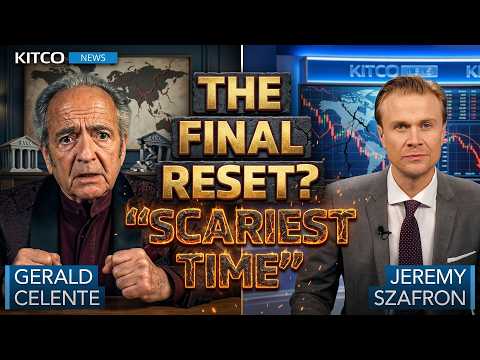
“The Scariest Time Of My Life” | Gerald Celente’s Warning for the Global Reset
Summary
Oil prices are volatile, with Brent Crude trading near $110, while gold has sharply declined towards $4,500 and silver slipped below $70, indicating a contradiction in the market amidst regional conflict.
Instruments
Timeline highlights
00:00–05:00
- Oil prices are volatile, with Brent Crude trading near $110, while gold has sharply declined towards $4,500 and silver slipped below $70, indicating a contradiction in the market amidst regional conflict.
- The dollar is reportedly getting stronger despite a projected $40 trillion debt level, which has risen from about 60% to over 100% of GDP, raising questions about the sustainability of this strength.
- Gold prices spiked to $5,400 following tensions with Iran but fell over $200 per ounce when US equity markets opened, suggesting forced liquidation or a breakdown in the safe haven trade.
05:00–10:00
- Oil prices are being manipulated to remain low, despite expectations that they should be skyrocketing due to inflation and geopolitical tensions. This manipulation is seen as a tactic to maintain control over the market and prevent a breakout in gold prices, which would expose systemic weaknesses.
- The price of gasoline has risen significantly, from $2.30 reported in the State of the Union to $3.91 a gallon, indicating a troubling trend that could harm the economy. This increase in fuel prices is part of a broader inflationary environment that is affecting consumer spending.
- The U.S. trade deficit has shrunk by 25%, driven by an increase in gold exports, highlighting a growing demand for gold amidst economic uncertainty. This trend suggests that investors may be seeking safe-haven assets as market conditions deteriorate.
10:00–15:00
- The speaker suggests that the prices of gold and silver should be rising significantly, indicating a disconnect between these precious metals and the current economic situation, which they believe is being manipulated by officials.
- Historical parallels are drawn to the economic conditions leading up to World War II, suggesting that when economic conditions deteriorate, governments may resort to war as a distraction, which could have implications for current geopolitical tensions and market stability.
- The speaker warns that the current economic trends mirror those of the past, where actions taken by governments, such as cutting off trade and resources, can lead to significant market disruptions and conflicts.
15:00–20:00
- Public sentiment towards the economy is declining, with only about 57% of Americans opposing the current war, contrasting sharply with the 92% support for Bush's war post-9/11.
- The average age of first-time home buyers in America has risen from 28 to 40 years, indicating a significant shift in the housing market and economic accessibility for younger generations.
20:00–25:00
- The office vacancy rate has surged to over 20%, up from around 11% before COVID-19, indicating a significant downturn in commercial real estate. This trend suggests potential financial instability for banks holding these properties.
- If the U.S. escalates military action against Iran, oil prices could spike to between $100 and $130 a barrel, which would likely crash global equity markets and the economy. This scenario highlights the interconnectedness of geopolitical tensions and energy prices.
- Reports indicate that the U.S. administration is considering actions against Iran's main oil export terminal, which could further strain global oil supply. The discussion of such measures underscores the rising stakes in the region and their potential impact on oil markets.
25:00–30:00
- The ongoing military tensions and the inability to control the Straits of Ramuz are contributing to rising oil prices, as the U.S. Navy may soon escort vessels through the area. This situation reflects broader concerns about the economic impact of military spending, which is already straining the U.S. economy.
- Investors are increasingly wary of credit risks associated with major tech companies like Alphabet, Meta, and Microsoft as the costs of AI development rise. This shift in credit markets suggests that the AI boom may be experiencing signs of a bubble, raising concerns about its sustainability.
30:00–35:00
- The over-investment in American equity markets, particularly in AI companies, is leading to financial losses as many of these firms are not yet profitable. As a result, smart money is beginning to pull back from these investments, indicating a potential market correction.
35:00–40:00
- The speaker highlights a historical context where independent voices in media have been blacklisted, indicating a potential risk for dissenting opinions during wartime, which could affect market perceptions and investor confidence.

Gold $10,000 & Silver $200? Philippe Gijsels: “Largest Bull Market in History” Begins
Summary
Gold and silver are under pressure following a hotter than expected US producer inflation report, indicating a potential shift in market dynamics.
Instruments
Timeline highlights
00:00–05:00
- Gold and silver are under pressure following a hotter than expected US producer inflation report, indicating a potential shift in market dynamics.
- Brent crude oil has surged past $109 a barrel due to direct strikes on E-Bron's upstream gas infrastructure, highlighting escalating tensions in energy markets.
- The Federal Reserve may be forced to prioritize growth over controlling inflation, which could lead to increased investment in gold and silver as a hedge against inflation.
05:00–10:00
- The current silver market appears disorderly, indicating potential fragility and overextension, which may lead to profit-taking among investors as they respond to margin calls.
- There is an expectation that gold could reach $10,000 and silver could see prices around $200 in the coming years, driven by a mining cycle that is just beginning amid significant underinvestment in new resources.
- The lack of meaningful gold finds in recent years, with only a few hundred thousand ounces discovered compared to millions in previous decades, highlights the challenges in increasing supply in the commodity space.
10:00–15:00
- Oil prices are currently above $109, with potential to rise to $150 if supply disruptions continue, particularly due to geopolitical tensions affecting the Strait of Hormuz.
- The U.S. crude inventory saw a build of 6.16 million barrels, indicating that the market is more concerned about refined products and regional gas disruptions than headline crude stocks.
- Natural gas prices are expected to experience stronger and larger spikes compared to crude oil due to the inherent difficulties in moving natural gas and lower stock levels.
15:00–20:00
- China is increasingly dominating the commodities market, particularly in metals, while remaining silent on oil and gas, indicating a strategic focus on energy independence and investment in various energy sources.
- The gas market remains fragmented compared to oil, but there are signs that it may evolve towards a more unified pricing structure similar to oil, with Asian markets already bidding up energy prices.
- Inflation is becoming a global concern, with central banks facing a split response; some are surrendering to inflation while others, like the ECB, are preparing for interest rate hikes in response to rising energy prices.
20:00–25:00
- The U.S. Federal Reserve is considering further interest rate cuts despite inflation rates being above target, indicating a potential shift in monetary policy to allow inflation to run higher.
- Central banks are facing a dilemma between controlling inflation and maintaining the illusion of control, with the ECB potentially risking growth by hiking rates while the U.S. may adopt a more lenient approach.
- The current economic environment suggests a fiscal dominance where central banks may prioritize government debt management, creating favorable conditions for gold, silver, and commodities.
25:00–30:00
- Investors are currently under-invested in real assets, including energy and mining sectors, which represent only a small percentage of the S&P 500. A correction in the market could present a significant opportunity for a second leg of the ongoing move towards these assets.
30:00–35:00
- As inflation rises, traditional 60/40 portfolios may struggle, prompting a need for alternative assets like commodities and tokens to compensate for losses in equities and bonds. This shift suggests that future investment strategies will likely incorporate a broader range of asset classes.
- Despite recent rallies, skepticism remains in the mining sector, as many investors view mining stocks as short-term trades rather than long-term investments. However, with current price-to-earnings ratios being low, there is potential for significant upside as market perceptions begin to shift.
35:00–40:00
- The current market is experiencing a live supply shock, with stubborn energy pressures impacting pricing dynamics. This situation suggests that central banks may have less room to maneuver than previously assumed.
- There is a belief that central banks and governments will avoid deflation by allowing inflation to run and printing more money. This could lead to a degradation of the value of money, making it essential for investors to hold assets like gold and silver.