Business / Sports Business
Monitor sports business trends, media rights, sponsorship dynamics and commercial strategy through curated structured summaries.
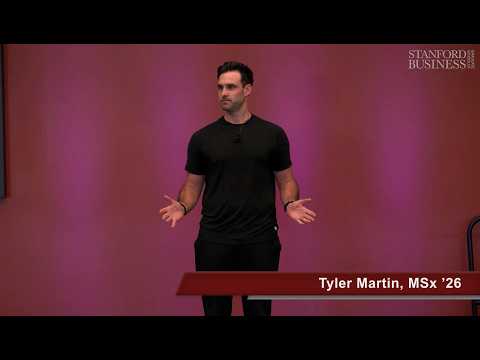
The Data Delusion: Tracked, Hacked and Out of Breath | Tyler Martin, MSx ’26
Summary
A former Olympian discusses the irony of struggling with fitness despite using health trackers. He highlights the overwhelming reliance on technology, which often leads to underperformance and a lack of personal accountability. Many individuals abandon their wearables within a year, indicating a disconnect between data and actual health outcomes.
The shares personal experiences of neglecting his health due to life circumstances, including the challenges of parenthood. He emphasizes the importance of integrating movement into daily life rather than relying solely on devices to track fitness. A shift in mindset towards non-exercise activity thermogenesis (NEAT) can significantly impact calorie expenditure.
Returning to the gym was facilitated by accountability through social connections. The notes that small, consistent decisions can compound to create significant changes in health and well-being. Engaging in physical activity not only improves fitness but also enhances overall life quality and relationships.
Research supports the idea that exercising the brain through physical activity can rewire neural pathways, reducing cravings for unhealthy foods. The encourages finding opportunities for movement throughout the day, emphasizing that convenience has inadvertently led to a sedentary lifestyle.
Perspectives
Analysis of personal accountability in health and fitness.
Pro Personal Accountability
- Highlights the irony of relying on technology while neglecting personal health
- Emphasizes the importance of integrating movement into daily life
- Shares personal experiences of overcoming health challenges through accountability
- Encourages small lifestyle changes to improve overall well-being
- Argues that action, not data, drives fitness momentum
Pro Wearable Technology
- Acknowledges the data provided by wearables as beneficial
- Notes that wearables can track steps and health metrics
- Mentions the appeal of data for motivation
Neutral / Shared
- Discusses the concept of NEAT and its impact on calorie burning
- References studies on the effects of exercise on brain function
Metrics
abandonment_rate
half of us abandoned us within 12 months %
wearable device usage
High abandonment rates indicate a disconnect between technology and sustained health engagement.
Turns out half of us abandoned us within 12 months.
weight_loss
the group that actually had the wearable lost only half much weight %
weight loss comparison
This suggests that wearables may not be effective in promoting weight loss.
To everyone's surprise, the group that actually had the wearable lost only half much weight.
exercise_time
only 17 minutes exercising minutes
daily exercise time
Minimal exercise time indicates a significant gap in physical activity.
and only 17 minutes exercising.
calorie_burn
you can burn up to 2,000 more calories per day calories
calories burned through NEAT
Incorporating NEAT can significantly enhance daily calorie expenditure.
The Mayo Clinic has found that you can burn up to 2,000 more calories per day just by incorporating elements of this type of exercise into your day.
neural_growth
the anterior mid-singulate cortex physically grows larger when you do the hard things you don't want to do
brain growth related to challenging activities
This highlights the cognitive benefits of facing difficulties.
this part of your brain physically grows larger when you do the hard things you don't want to do
exercise_impact
just by exercising your brain, neural processing, literally rewires
impact of exercise on neural pathways
This suggests that physical activity can reduce cravings for unhealthy foods.
just by exercising your brain, neural processing, literally rewires
Key entities
Timeline highlights
00:00–05:00
The speaker discusses the irony of being a former Olympian who struggles with fitness despite using health trackers. He emphasizes the importance of personal accountability and integrating movement into daily life to improve health outcomes.
- The speaker reflects on the irony of being a former Olympian who now struggles with fitness despite using multiple health trackers. This highlights the disconnect between technology and actual health outcomes
- Research indicates that many wearable device users abandon them within a year, suggesting that reliance on technology can lead to decreased personal effort. This adds to doubts about the effectiveness of such devices in promoting real health improvements
- The speaker shares a personal story of neglecting his health due to life changes, including a new baby and a startup. This illustrates how life circumstances can derail fitness goals and the importance of addressing health proactively
- A turning point occurs when the speaker realizes that he is not physically active despite using health technology. This moment emphasizes the need for personal accountability in achieving fitness rather than relying solely on devices
- The concept of non-exercise activity thermogenesis (NEAT) is introduced as a way to incorporate more movement into daily life without structured workouts. This approach can significantly increase calorie expenditure and improve overall health
- The speaker adopts small changes, like taking walking calls and playing with his children, to integrate movement into his routine. This practical strategy demonstrates that even minor adjustments can lead to substantial health benefits
05:00–10:00
The speaker emphasizes the importance of personal accountability and small lifestyle changes in improving health outcomes. He argues that integrating movement into daily routines is more effective than relying solely on technology for fitness.
- Returning to the gym was driven by personal accountability, showing how small choices can lead to significant life changes and resilience
- Challenging activities enhance mental strength by stimulating the anterior mid-singulate cortex, indicating that facing difficulties can promote brain growth
- Regular exercise increases energy and improves life management, fostering better relationships and healthier habits at home
- Research from UT Austin shows that physical activity can rewire neural pathways, which may help reduce cravings for unhealthy foods
- The main message is to incorporate movement into daily routines instead of relying on technology for fitness, as simple actions can yield substantial health benefits
- Modern conveniences have reduced physical activity, and embracing small inconveniences can create a positive cycle of movement and health