Business / Luxury Brands
Track luxury brand strategy, premium consumer demand, global positioning and business shifts in the high-end market.
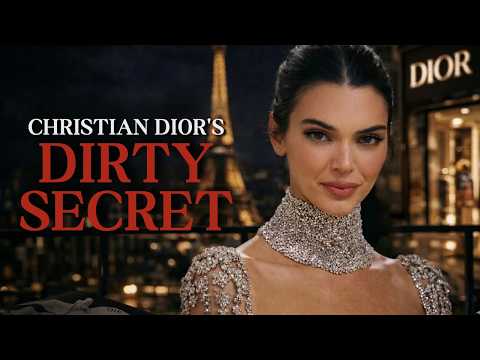
How Christian Dior went from Bankrupt to a $100 Billion Luxury Empire? : Business case study
Summary
In 1984, the Boussac Group, owner of Christian Dior, faced severe financial losses, prompting government intervention to protect jobs. Bernard Arnault acquired the brand for one franc and transformed it into a $100 billion luxury powerhouse through strategic restructuring. Despite initial promises to retain all workers, Arnault laid off 9,000 employees after selling profitable parts of the Boussac Group.
Arnault executed a four-step psychological campaign to reposition Christian Dior as a luxury brand. He eliminated cheap product licenses, creating an artificial scarcity that increased demand. By raising prices and limiting supply, he leveraged the Veblen good effect, where higher prices enhance desirability.
Strategic marketing included collaborations with influential figures like Princess Diana, which significantly boosted brand visibility and desirability. Arnault's approach targeted younger demographics, ensuring that Dior remained relevant in a changing market. The introduction of iconic products like the Lady Dior bag exemplified this strategy.
Arnault's tactics extended beyond handbags, as he consistently collaborated with modern celebrities to maintain brand aspiration among younger consumers. This strategy helped Dior evolve from a heritage brand into a contemporary luxury powerhouse, appealing to new generations.
Perspectives
short
Bernard Arnault's Strategy
- Acquired Christian Dior for one franc, investing $15 million and securing $65 million from an investment bank
- Laid off 9,000 employees after selling profitable Boussac parts, generating $500 million despite initial promises
- Executed a four-step psychological campaign to reposition Dior as a luxury brand
- Eliminated cheap product licenses to create artificial scarcity and increase demand
- Collaborated with influential figures like Princess Diana to enhance brand visibility
- Targeted younger demographics through strategic marketing and celebrity endorsements
Critique of Arnault's Methods
- Raised ethical questions about the implications of breaking promises to retain workers
- Assumed that demand for luxury items would remain high despite potential market saturation
- Overlooked the potential impact of changing consumer preferences on brand perception
- Created a risk of brand identity dilution through excessive collaborations
Neutral / Shared
- Transformed Christian Dior into a luxury powerhouse valued over $100 billion
- Utilized strategic marketing to maintain brand relevance in a competitive market
Metrics
valuation
114 billion dollars USD
current valuation of Christian Dior
This valuation underscores the brand's significant market position in the luxury sector.
Today, Kristen Deore is worth 114 billion dollars
annual_sales
88 billion dollars USD
annual sales of Christian Dior products
High annual sales reflect strong consumer demand and brand loyalty.
they sell 88 billion dollars worth of products every single year
losses
20 million dollars USD
annual losses incurred by Boussac Group
Understanding the scale of losses highlights the risk Arnault took in acquiring the brand.
the Bosaic group that owns Kristen Deore is incurring around 20 million dollars in losses
acquisition_cost
one franc USD
cost at which Arnault acquired Christian Dior
The nominal acquisition cost illustrates the extreme risk and potential for high reward.
He bought Kristen Deore for one franc
investment
$15 million USD
Initial investment by Arnault
This investment was crucial for securing the acquisition and restructuring.
put off 15 million dollars of his own money
funding
$65 million USD
Funding secured from an investment bank
This funding was essential to meet government conditions for the acquisition.
gathered 65 million dollars from an investment bank
job_layoffs
9,000 units
Number of employees laid off
This action contradicted Arnault's promise to retain workers, raising ethical concerns.
laid off 9,000 workers
units_sold
200,000 units
units of the Lady Dior bag sold in two years
High sales volume indicates successful market penetration and brand desirability.
de-or-sold 200,000 units in just 2 years
Key entities
Timeline highlights
00:00–05:00
In 1984, the Boussac Group, owner of Christian Dior, faced severe financial losses, prompting government intervention to protect jobs. Bernard Arnault acquired the brand for one franc and transformed it into a $100 billion luxury powerhouse through strategic restructuring.
- In 1984, Christian Dior faced collapse with Boussac Group losing $100 million annually, prompting government intervention to prevent massive unemployment
- The government required the new owner to retain all 20,000 workers and keep factories running, deterring most investors
- Bernard Arnault, a real estate entrepreneur, acquired Christian Dior for 1 franc, initiating a legendary business turnaround
- Arnault restructured the group and revitalized the Dior brand, transforming it into a $100 billion luxury powerhouse
- Boussacs financial troubles began in 1973 due to rising oil prices, leading to the dilution of the Dior brand through excessive licensing
- Arnaults vision turned a liability into a billion-dollar brand, establishing Christian Dior as an iconic name in fashion
05:00–10:00
Bernard Arnault acquired Christian Dior for one franc, investing $15 million and securing $65 million from an investment bank. He laid off 9,000 employees after selling profitable Boussac parts, generating $500 million despite initial promises to retain all workers.
- Bernard Arnault acquired Christian Dior for 1 franc, investing $15 million and securing $65 million from an investment bank to meet government conditions
- Arnault laid off 9,000 employees after selling profitable Boussac parts, generating $500 million despite initial promises to retain all workers
- He eliminated cheap licenses and products, restoring Diors luxury status and creating an artificial gap between luxury consumers and the public
- By increasing prices and reducing supply, Arnault leveraged the Veblen good effect, boosting demand for luxury items
- Diors transformation from cheap products to a luxury powerhouse exemplifies strategic brand repositioning and effective marketing
- Arnaults actions led to Diors valuation exceeding $100 billion, highlighting the impact of brand control and exclusivity
10:00–15:00
Bernard Arnault transformed Christian Dior into a luxury powerhouse by limiting supply and raising prices, creating exclusivity. Collaborations with modern celebrities and strategic marketing targeted younger audiences, significantly boosting sales.
- Arnault limited supply and raised prices, creating exclusivity and skyrocketing demand for luxury goods
- He refreshed Diors image by replacing old designers and targeting younger audiences
- Princess Dianas endorsement of the Lady Dior bag led to a surge in sales, generating over $1.1 billion
- The impractical saddlebag became a cultural icon, appealing to the MTV generation
- Diors collaborations with modern celebrities kept the brand relevant across generations
15:00–20:00
Bernard Arnault transformed Christian Dior into a luxury powerhouse valued over $100 billion through strategic marketing and collaborations. His approach to exclusivity and targeting younger demographics has significantly boosted sales and brand relevance.
- Bernard Arnault acquired Christian Dior for 1 franc, transforming it into a luxury powerhouse valued over $100 billion
- He created exclusivity around Dior, leveraging cultural icons like Princess Diana to boost sales of the Lady Dior bag
- Arnaults marketing strategy elevated luxury items status by associating them with high-profile celebrities
- He targeted younger generations through collaborations, ensuring Diors relevance across demographics
- Arnaults frequent collaborations address the luxury markets aging customer base, keeping the brand appealing
- His repeatable blueprint for success led to the acquisition of Tiffany & Co., expanding his luxury empire