Business / Logistics And Shipping
India's Food Crisis
The United States' blockade of the Strait of Hormuz poses a significant threat to India's fertilizer imports, potentially leading to a food crisis. India's agricultural practices, heavily reliant on imported fertilizers, are unsustainable and risk long-term soil degradation. The current subsidy model exacerbates dependency rather than fostering self-sufficiency.
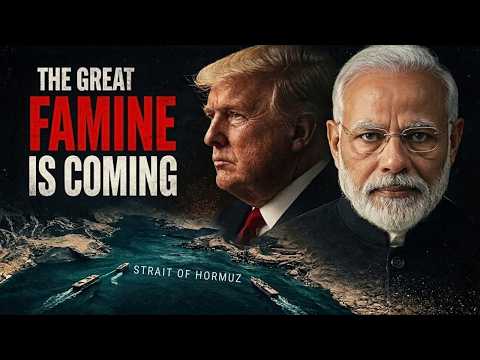
Source material: India's FOOD CRISIS is coming..and we CANT stop it!! |Geopolitical case study
Summary
The United States' blockade of the Strait of Hormuz poses a significant threat to India's fertilizer imports, potentially leading to a food crisis. India's agricultural practices, heavily reliant on imported fertilizers, are unsustainable and risk long-term soil degradation. The current subsidy model exacerbates dependency rather than fostering self-sufficiency.
Excessive use of chemical fertilizers in India is leading to soil degradation and jeopardizing agricultural productivity. Farmers often lack knowledge about proper fertilizer application, which adversely affects soil fertility and crop output. The reliance on imported fertilizers makes the agricultural sector vulnerable to geopolitical tensions, raising concerns about food security.
India's agricultural system is historically vulnerable, with a reliance on imported fertilizers posing significant risks to food security. The concentration of global fertilizer production in a few nations exacerbates this vulnerability, necessitating urgent strategic changes. Transitioning to organic farming is not a viable solution, as it would significantly reduce crop yields.
India imports all of its phosphate and potash, with no domestic reserves, making the agricultural sector precarious. The shift to organic farming could significantly reduce crop yields, threatening food security for millions. The dependency on imported fertilizers creates a precarious balance, where geopolitical tensions could disrupt supply chains.
Perspectives
Analysis of India's agricultural dependency and potential food crisis.
Proponents of Current Agricultural Practices
- Claims that fertilizer subsidies support farmers and enhance agricultural productivity
- Argues that the Green Revolution significantly increased food grain yields
- Highlights the importance of chemical fertilizers in feeding a growing population
- Proposes that innovations like nano-urea can improve fertilizer efficiency
Critics of Current Agricultural Practices
- Warns that reliance on imported fertilizers creates a vulnerability to geopolitical tensions
- Denies the sustainability of current agricultural practices due to soil degradation
- Accuses the government of exacerbating dependency through subsidies
- Questions the effectiveness of chemical fertilizers in the long term
- Rejects the notion that transitioning to organic farming is feasible without significant yield loss
Neutral / Shared
- Notes that Indias agricultural data shows a significant increase in fertilizer use over the decades
- Observes that soil health is deteriorating due to excessive chemical fertilizer application
- Mentions the historical context of famines in India and their relation to agricultural practices
Metrics
subsidy
6.77 lakh crores INR
total fertilizer subsidy since the Russia-Ukraine war
This amount exceeds spending on education and healthcare, highlighting prioritization issues.
the Indian government spent 6.77 lakh crores on fertilizers since the Russia Ukraine war.
selling_price
240 rupees INR
price at which fertilizers are sold to farmers
The low selling price contributes to the unsustainable subsidy model.
it sells it to the farmers at just 240 rupees.
fertilizer_dependency
50%
percentage of fertilizers imported
High dependency on imports makes the agricultural sector vulnerable to external shocks.
50% of these fertilizers actually come through this 21 mile seaway called the Strait of Hormuz.
other
1 lakh professionals people
number of professionals empowered by the AI training program
This indicates a significant reach and impact of the training initiative.
This program has already empowered over 1 lakh professionals across 40 countries.
other
1.6 billion people
population reached by 1900
This highlights the dramatic increase in population and the subsequent strain on food resources.
we reached a population of 1.6 billion people by 1900.
deaths
around 15 billion people
deaths during famines in British India
This historical context underscores the ongoing risks of food insecurity in India.
In fact, in British India alone, we witnessed 24 major famines between 1850 and 1899 that killed around 15 billion people.
phosphate reserves
31 million tons
India's phosphate reserves
Limited reserves threaten India's ability to sustain its agricultural output.
And India only has 31 million tons of phosphate reserves.
global phosphate control
70% of the world's known phosphate reserves
Morocco's control over phosphate reserves
This concentration of control poses a risk to countries like India that rely on imports.
a country called Morocco controls 70% of the world's known phosphate reserves.
Key entities
Timeline highlights
00:00–05:00
The United States' blockade of the Strait of Hormuz poses a significant threat to India's fertilizer imports, potentially leading to a food crisis. India's agricultural practices, heavily reliant on imported fertilizers, are unsustainable and risk long-term soil degradation.
- The United States blockade of the Strait of Hormuz threatens Indias fertilizer imports, risking a potential food crisis in the country
- Since 1951, Indias grain yields have increased fivefold, but fertilizer usage has surged by 280 times, raising sustainability concerns for agriculture
- The Indian government heavily subsidizes fertilizers, purchasing them at ₹2,200 per bag and selling them for ₹242, resulting in a total subsidy of ₹6.77 lakh crore since the Russia-Ukraine war, surpassing education and healthcare spending
- Soil health data from major agricultural states shows that these subsidies are detrimental, leading to soil degradation and increased dependency on imports
- Current agricultural practices risk rendering large areas of farmland barren within decades, emphasizing the need for India to achieve fertilizer self-sufficiency
- This situation raises a crucial question: why is India not self-sufficient in fertilizers despite its agricultural strength? Addressing this could uncover significant business opportunities
05:00–10:00
Excessive use of chemical fertilizers in India is leading to soil degradation and jeopardizing agricultural productivity. The reliance on imported fertilizers makes the agricultural sector vulnerable to geopolitical tensions, raising concerns about food security.
- Excessive chemical fertilizer use is degrading soil health in India, jeopardizing agricultural productivity and food security as land risks becoming barren in decades
- Many farmers lack knowledge about proper fertilizer application, worsening soil fertility issues and reducing crop yields, which perpetuates environmental harm
- Despite significant government subsidies for fertilizers, the current reliance on them is unsustainable and financially burdensome for taxpayers, failing to resolve the soil health crisis
- Indias dependence on imported fertilizers makes its agricultural sector vulnerable to geopolitical tensions, raising concerns about food production during international conflicts
- Historical food shortages in the late 1800s due to population growth outpacing supply highlight the risks of current agricultural practices that could lead to similar crises
- The integration of artificial intelligence in agriculture is becoming crucial for enhancing efficiency and productivity, with those who do not adapt facing significant disadvantages
10:00–15:00
India's agricultural system is historically vulnerable, with a reliance on imported fertilizers posing significant risks to food security. The concentration of global fertilizer production in a few nations exacerbates this vulnerability, necessitating urgent strategic changes.
- Indias agricultural system has a history of vulnerability, with 24 major famines during British rule leading to millions of deaths, highlighting ongoing food insecurity risks
- The countrys reliance on guano from Peru for nitrogen fertilizer illustrates the fragility of its agricultural inputs, necessitating urgent alternative solutions as this resource diminishes
- The Haber-Bosch process transformed nitrogen fertilizer production, but its dependence on natural gas means disruptions in gas supply could severely impact food production
- Geopolitical factors worsen Indias fertilizer crisis, as its reliance on imports from nations with abundant natural gas makes it susceptible to international supply chain issues
- Phosphorus and potash, vital for fertilizers, are largely controlled by a few countries, leaving India with limited reserves and threatening its food security
- The concentration of global fertilizer production in a few nations raises concerns about Indias capacity to maintain agricultural output, risking severe food shortages without strategic changes
15:00–20:00
India's agricultural system is critically dependent on imported fertilizers, with no domestic potash reserves and reliance on foreign ammonia and phosphate. The shift to organic farming could significantly reduce crop yields, threatening food security for millions.
- Indias agricultural stability is at risk due to its complete reliance on imported fertilizers, with no domestic potash reserves and dependence on foreign ammonia and phosphate sources
- Shifting to organic farming could reduce crop yields by 20-25%, threatening food security for hundreds of millions and highlighting the unsustainability of current practices
- Despite a significant increase in fertilizer use, historical data indicates that this has not led to sustainable agricultural methods, with nitrogen overuse damaging soil health and risking barren lands
- Punjab illustrates the dangers of excessive fertilizer use, where an imbalanced nitrogen to potassium ratio harms soil microbes and contaminates groundwater, endangering public health
- High nitrate levels in groundwater are already compromising drinking water quality in various Indian districts, posing serious health risks such as cancer and developmental issues in infants
- The Indian governments fertilizer subsidies, while aimed at supporting farmers, are fostering dependency and environmental harm, diverting funds from critical areas like education and healthcare
20:00–25:00
India's agricultural sector faces significant challenges due to its reliance on chemical fertilizers, leading to soil degradation and jeopardizing food security for over a billion people. The Modi government's fertilizer subsidies create a false sense of security, exacerbating the cycle of dependency on imports and increasing financial strain on the government.
- Indias agricultural future is threatened by its heavy reliance on chemical fertilizers, which leads to soil degradation and water contamination, jeopardizing food security for over a billion people
- The Modi governments fertilizer subsidies create a false sense of security among farmers, encouraging overuse of fertilizers that worsen soil health and increase government financial strain
- Innovative solutions like nano-urea could enhance nitrogen efficiency and lower costs, but Indias dependence on imports for phosphorus and potash remains a significant hurdle
- Current agricultural practices are trapped in a cycle where increased fertilizer use causes more soil damage and higher import costs, risking an agricultural collapse
- Geopolitical tensions, especially concerning the Strait of Hormuz, threaten Indias food supply, with potential shipping blockages leading to an imminent food crisis
- Immediate action from the government and private sector is essential to develop sustainable agricultural practices, as failure to do so could have dire consequences for food security in India