Business / Logistics And Shipping
Follow logistics and shipping trends, supply chain changes, freight dynamics and global trade signals through curated business analysis.
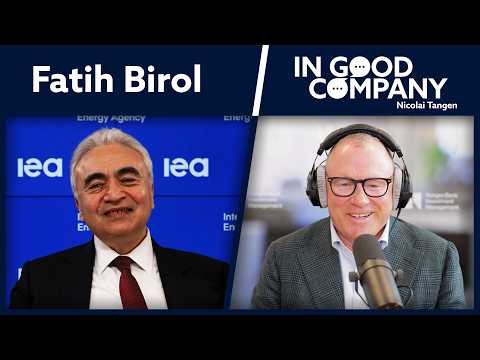
IEA Executive Director: The global energy crisis explained | Podcast | In Good Company
Summary
Dr. Fatih Birol, Executive Director of the International Energy Agency, emphasizes the underestimation of the Middle East crisis, which poses significant risks to the global economy. He argues that the current energy crisis is unprecedented, surpassing previous crises in terms of oil and gas losses, and highlights the importance of recognizing the severity of the situation.
The energy crisis is severely impacting Asia and is expected to affect Europe soon, highlighting vulnerabilities in the global energy system. Governments are encouraged to implement demand-side strategies to support vulnerable populations facing rising energy costs.
The energy crisis in Europe is expected to escalate by April or early May, prompting the need for government intervention. Increased competition from Asian buyers is driving up gas prices, which may lead to higher electricity costs and economic strain.
The ongoing energy crisis is exacerbated by geopolitical tensions, particularly regarding Russia, which has damaged the liquefied natural gas market's reputation. Countries like Iraq are particularly vulnerable due to their heavy reliance on oil revenues, facing significant economic challenges ahead.
Perspectives
Analysis of the global energy crisis and its implications.
Proponents of urgent energy crisis recognition and action
- Warns that the Middle East crisis is underestimated by markets and politicians
- Highlights the unprecedented scale of current oil and gas losses
- Argues for immediate government intervention to address rising energy costs
- Emphasizes the need for demand-side strategies to support vulnerable populations
- Calls for a revival of nuclear power and increased electrification in transportation
- Stresses the importance of addressing infrastructure shortcomings for energy resilience
Skeptics of the current energy crisis narrative
- Questions the effectiveness of releasing strategic reserves to stabilize prices
- Challenges the assumption that temporary measures will provide long-term solutions
- Critiques the reliance on historical comparisons without considering current geopolitical dynamics
- Raises concerns about the sustainability of energy strategies amid rising coal use
Neutral / Shared
- Acknowledges the need for governments to support legacy industries
- Recognizes the potential for advanced battery technology to enhance competitiveness
- Notes the increasing demand for electricity driven by AI and other technologies
Metrics
loss
12 million barrels per day units
current energy crisis
This loss indicates a disruption greater than previous oil crises, impacting global supply chains.
we lost 12 million barrels per day, so more than two of these oil crisis put together.
damaged_assets
40 key assets units
energy assets in the region
Damage to these assets complicates recovery efforts and exacerbates supply challenges.
according to our database, 40 key assets have been damaged.
supply
400 million barrels units
oil released to the markets
This release aimed to lower prices but was insufficient to prevent a rebound.
I announced that we released 400 million barrels of oil to the markets
percentage
20%
of reserves released
This significant release indicates the severity of the crisis.
The 400 million barrels that you released, it's roughly 20% of reserves.
loss
twice the loss of oil in March units
expected loss of oil in April compared to March
This projection highlights the worsening situation in the energy market.
the loss of oil in April will be twice the loss of oil in March.
oil_release
400 million barrels
historic release to stabilize the market
This is the largest release in history, indicating the severity of the crisis.
this is only 400 million barrels is the largest we ever made in the history.
price_increase
high gas prices and high electric prices
impact of increased competition from Asian buyers
Rising prices will further strain European economies.
we will have in Europe high gas prices and high electric prices.
revenue
90% of the government revenues come from selling oil
Iraq's government revenue structure
This highlights Iraq's vulnerability to fluctuations in oil prices.
Iraq, 90% of the government revenues come from from selling oil.
Key entities
Timeline highlights
00:00–05:00
Dr. Fatih Birol emphasizes the underestimation of the Middle East crisis, which poses significant risks to the global economy.
- Dr. Fatih Birol warns that the Middle East crisis is being significantly underestimated, which could lead to severe repercussions for the global economy
- He asserts that the current energy crisis is unprecedented, with a loss of 12 million barrels per day indicating a disruption greater than those experienced in 1973 and 1979
- The crisis is impacting not just oil but also essential commodities like petrochemicals and fertilizers, threatening global supply chains and economic stability
- Birol reports that 40 key energy assets in the region have been damaged, complicating recovery efforts and worsening supply challenges
- He observes that governments are starting to acknowledge the crisiss severity and are implementing measures to address it, marking a positive shift in global leadership
- The need for proactive international cooperation, particularly among groups like the G7 and G20, to effectively respond to the energy crisis
05:00–10:00
The energy crisis is severely impacting Asia and is expected to affect Europe soon, highlighting vulnerabilities in the global energy system. Governments are encouraged to implement demand-side strategies to support vulnerable populations facing rising energy costs.
- The energy crisis is particularly acute in Asia, with impending effects on Europe, exposing vulnerabilities in the global energy system, especially at critical points like the Strait of Hormuz
- The International Energy Agencys release of 400 million barrels of oil initially lowered prices, but the subsequent price rebound suggests this action alone may not resolve the ongoing crisis
- Governments are urged to adopt demand-side strategies, such as encouraging remote work and lowering speed limits, to alleviate rising energy costs for vulnerable populations
- Emerging and developing nations are disproportionately affected by the energy crisis, facing severe economic challenges and potential energy rationing due to rising costs and limited resources
- April is expected to see greater oil supply disruptions than March, with a lack of new shipments likely worsening inflation and economic growth, especially in countries with weaker currencies
- A critical shortage of jet fuel and diesel is currently impacting transportation and logistics, necessitating ongoing market assessments to determine if additional reserve releases are required
10:00–15:00
The energy crisis in Europe is expected to escalate by April or early May, prompting the need for government intervention. Increased competition from Asian buyers is driving up gas prices, which may lead to higher electricity costs and economic strain.
- The energy crisis in Europe is projected to worsen by April or early May, necessitating proactive measures from governments to address impending challenges
- The historic release of 400 million barrels of oil aims to stabilize the market temporarily, but it fails to tackle the underlying issues of the crisis
- European governments should implement targeted support for vulnerable populations to alleviate the financial burden of rising energy costs
- Increased competition from Asian buyers is driving up European gas prices, which will likely lead to higher electricity costs and further economic pressure
- There are concerns that soaring energy prices may drive extreme political ideologies in Europe, potentially influencing energy policy during upcoming elections
- Resuming Russian gas imports faces significant technical and economic hurdles, highlighting the urgent need for Europe to diversify its energy sources
15:00–20:00
The ongoing energy crisis is exacerbated by geopolitical tensions, particularly regarding Russia, which has damaged the liquefied natural gas market's reputation. Countries like Iraq are particularly vulnerable due to their heavy reliance on oil revenues, facing significant economic challenges ahead.
- Overreacting to Russias actions has compounded the current energy crisis, emphasizing the need for careful energy policy decisions to avoid repeating past mistakes
- The ongoing conflict is damaging the liquefied natural gas markets reputation, which may affect perceptions of gas as a reliable energy source
- Countries in the Middle East will face different economic impacts from the energy crisis, with Iraq particularly struggling due to its dependence on oil revenues
- The worst-case scenario includes the prolonged closure of key shipping routes, which could severely harm the global economy, especially for emerging nations not involved in the conflict
- The 1970s debt crisis serves as a historical warning, illustrating the socio-economic risks of energy shortages if the current situation escalates
- The gas industry must actively work to rebuild its reputation as a reliable supplier, as failure to do so could lead to lasting changes in global energy markets
20:00–25:00
The current energy crisis is expected to drive significant long-term changes in the energy sector, including a revival of nuclear power and increased electrification in transportation. Governments must address infrastructure shortcomings to support the transition to a more resilient energy system.
- The current energy crisis is likely to drive major long-term changes in the energy sector, including a revival of nuclear power and greater electrification in transportation. This shift is essential to adapt to the evolving energy landscape
- Past energy crises have historically resulted in significant transformations, such as the growth of nuclear energy in the 1970s. Similar adaptations are anticipated in response to todays challenges, especially in Asia
- With electricity demand surging, there is an urgent need to create resilient energy grids globally. This is vital as increased electricity reliance heightens vulnerability to cyber threats
- The transition to electrified energy systems will not eliminate the ongoing reliance on oil and gas in the near term. This dependency underscores the complexities involved in moving towards a fully electrified energy future
- Government shortcomings in developing sufficient energy infrastructure could impede the growth of the renewable sector. Such failures may worsen existing vulnerabilities within the energy system
- In response to rising natural gas prices, there is a risk of increased coal consumption in regions like China and India. This trend could hinder global efforts to shift towards cleaner energy alternatives
25:00–30:00
The current energy crisis highlights significant vulnerabilities in global energy systems, particularly in grid capacity and cybersecurity. There is an urgent need for government action to improve infrastructure and attract private investment to meet rising electricity demand.
- The current energy crisis reveals critical weaknesses in global energy systems, especially in grid capacity, leading to underutilization of renewable sources and jeopardizing energy reliability
- Cybersecurity threats are increasingly targeting power systems, raising alarms about the resilience of electrified networks and necessitating urgent protective measures for critical infrastructure
- Investment in grid infrastructure hinges on government initiatives to foster a favorable climate, with streamlined licensing and permitting processes essential for attracting private sector involvement
- Electricity demand is expected to rise by 40% by 2035, posing a challenge for existing infrastructure to keep up, particularly in developing effective distribution grids
- Chinas significant role in global coal consumption may lead to a resurgence in coal use during the ongoing energy crisis, reversing progress in regions that had previously reduced coal reliance
- Europes past dependence on Russian gas and the scaling back of nuclear power are viewed as strategic errors, highlighting the urgent need to reinvest in nuclear energy for a balanced energy strategy