Business / Hospitality Tourism
Business signals: regulation, strategy, macro links, and market structure. Topic: Hospitality-Tourism. Updated briefs and structured summaries from curated sources.
![[detikPagi] Connecting Indonesia and Slovakia through Sustainable Infrastructure](https://i.ytimg.com/vi/7do3E8ctW2U/hqdefault.jpg)
[detikPagi] Connecting Indonesia and Slovakia through Sustainable Infrastructure
Full timeline
0.0–300.0
Slovakia offers unique experiences that showcase its natural beauty and cultural richness, including wild water adventures and treetop walks. The strong diplomatic relations between Indonesia and Slovakia are emphasized by Ambassador Thomas Perkos Laku, highlighting the importance of personal interactions for future cooperation.
- Slovakia offers unique experiences, such as wild water adventures and treetop walks. These activities highlight the countrys natural beauty and cultural richness
- Mr. Thomas Perkos Laku, the Ambassador of Slovakia, emphasizes the strong diplomatic relations between Indonesia and Slovakia. He notes their historical ties
- Recent visits by the Minister of Foreign Affairs and a business delegation have strengthened connections between the two nations. This has occurred at both governmental and personal levels
- Building trust through personal interactions is essential for future cooperation. This is especially true in business and education, according to Mr. Laku
- There is a strong emphasis on the importance of student exchanges and international relations. This reflects a shared aspiration among students to become diplomats
- The dialogue reveals a mutual interest in fostering closer ties. There is a particular emphasis on collaboration between students and business communities from both countries
300.0–600.0
The number of international relations students has increased significantly over the past five years, indicating a growing interest in global opportunities. Slovakia's recognition as an automotive hub has created a demand for skilled workers, particularly welders and truck drivers.
- The number of international relations students has significantly increased over the past five years. This reflects a growing interest in global opportunities
- Slovakia is recognized as an automotive hub in Europe. This has created a demand for skilled workers, including welders and truck drivers
- The Slovak government has established mechanisms to facilitate the visa application process for Indonesian workers. This makes it easier for them to find employment
- Employment agencies in Slovakia are collaborating with Indonesian partners. They prepare and train workers according to the needs of future employers
- Slovak employers appreciate Indonesian workers for their loyalty and strong work ethic. This has led to increased job opportunities for Indonesians in Slovakia
- Slovakia offers a rich cultural experience with beautiful landscapes and historical sites. A variety of seasonal foods also attract visitors
- The welcoming nature of Slovak people allows travelers to quickly make friends. This enhances their enjoyment of time spent in the country
600.0–900.0
Food experiences in Slovakia change with the seasons, featuring heavier dishes in winter and lighter options in summer. The chimney cake, a popular treat, is especially enjoyed during festive gatherings, reflecting Slovakia's cultural heritage.
- Food experiences in Slovakia vary by season. Winter features heavier dishes, while summer offers lighter options. The chimney cake, a popular treat, is especially enjoyed during Christmas markets
- The chimney cake is beautiful and delicious. It has a crispy caramelized exterior and a soft interior. It is often enjoyed alongside traditional foods like sausages and apple cider during festive gatherings
- Slovakias landscape shares similarities with Indonesia, particularly in its hilly terrain and abundance of rivers and lakes. Both countries face challenges related to flooding and landslides, highlighting potential areas for cooperation
- Slovakias expertise in water regulation could benefit Indonesia, which struggles with increasing flood risks. Collaborative efforts could focus on sharing knowledge and strategies for managing natural disasters
- While Slovakia is landlocked and lacks access to the sea, it still incorporates fish into its cuisine. This reflects its cultural heritage and resonates with Indonesias diverse culinary traditions
- Infrastructure development is a major focus for Indonesia. Slovakia could contribute through expertise, technology, or investment. Exploring these avenues could strengthen the partnership between the two nations
900.0–1200.0
Recent discussions between Indonesia and Slovakia focused on sectors such as digitalization, cybersecurity, and food security, highlighting a project to cultivate tropical wheat in Indonesia. Education exchange programs are prioritized to increase the number of Indonesian students studying in Slovakia and vice versa.
- A recent meeting in Kandin facilitated discussions on various sectors, including digitalization, cybersecurity, and food security between Indonesia and Slovakia
- One notable project involves cultivating tropical wheat in Indonesia. This crop is currently imported but can be grown locally with assistance from Slovak scientists
- Efforts are underway to improve mining efficiency in Indonesia. These efforts address challenges in industrialization and resource management through Slovak technologies
- Education exchange programs are a priority. The goal is to increase the number of Indonesian students studying in Slovakia and vice versa
- Current collaborations mainly involve PhD students and lectures. There is a push to expand these opportunities for younger students
- Experiencing life in another country fosters friendships and cultural understanding. This can strengthen relations between Indonesia and Slovakia
- Recommendations for must-visit places in Slovakia include the High Tatras. This scenic area is located near the border with Poland
1200.0–1500.0
High Tatras in Slovakia is a popular destination for both hiking in summer and skiing in winter. The region is also focusing on environmental sustainability through initiatives aimed at reducing plastic waste.
- High Tatras in Slovakia is compared to Bromo in Indonesia, featuring numerous hills and mountains. It is a dream destination for many, with plans to visit in the near future
- The best time to visit High Tatras varies based on activities. Summer is ideal for hiking, while winter is perfect for skiing, a popular leisure activity enjoyed by many residents
- Connectivity ecology is a significant topic for cooperation between Indonesia and Slovakia. This initiative focuses on plastic waste and waste solutions to reduce plastic waste that impacts tourism and the environment
- Younger generations are actively seeking ways to contribute to environmental sustainability. They are avoiding plastic straws and bags, while education plays a crucial role in helping children understand the value of recycling
- Slovakia boasts a rich historical heritage, with numerous castles and UNESCO heritage sites. Košice is known for its significant church and historical importance
- Košice is the second-largest city in Slovakia, recognized for its history and high-tech industry. The city is also experiencing new investments and developments in various sectors
1500.0–1800.0
Slovakia has well-developed infrastructure, including good highways and railways that enhance travel experiences. Visitors can explore the country comprehensively in a week, but even a short visit of two to three days can be enriching.
- Slovakias infrastructure is well-developed, featuring good highways and railways that facilitate travel. Visitors can easily drive to nearby countries, enhancing their travel experience
- Spending a week in Slovakia allows for a comprehensive exploration of the country. However, even a two or three-day visit can provide a rich experience
- The conversation emphasizes the importance of enjoying local culture and attractions. Engaging with Slovakias history and natural beauty is highly encouraged
- The hosts express gratitude to a senior official for his insights and participation. Their enthusiasm for the discussion reflects a shared interest in promoting Slovakia as a travel destination
- The tagline encourages viewers to stay engaged and not miss out on future content. This call to action aims to foster a community of interested viewers
- The hosts conclude with a light-hearted remark, reinforcing a friendly atmosphere. Their excitement about Slovakia and its offerings resonates throughout the discussion
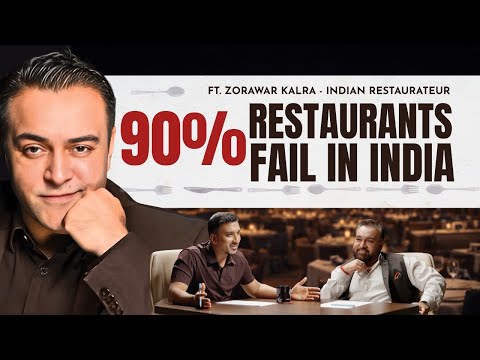
3 DEADLY Errors that are killing your Restaurant business? | Restaurant Blueprint | Zorawar Kalra
Full timeline
0.0–300.0
The restaurant industry faces a high failure rate, with nine out of ten establishments closing within the first year. Key factors for success include adequate capitalization and strategic location selection.
- Nine out of ten restaurants shut down within the first year, indicating a significant risk in the industry. This raises questions about the common mistakes made by restaurant owners that lead to such high failure rates. One assertion is that being undercapitalized is a critical error, suggesting that having at least six months of working capital is essential before opening a restaurant
- Choosing the right location is emphasized as a fundamental principle for restaurant success. The assertion that location, location, location are the three most important factors implies that a corporate area with nearby residents is ideal. This raises doubts about the effectiveness of restaurants in less strategic locations and whether they can thrive without proper market positioning
- The discussion on pricing frameworks indicates that studying local competitors pricing is crucial for success. There is an implied concern that pricing disruptions may not be the best strategy, suggesting that restaurants should be cautious in their pricing approaches. This leads to speculation about how pricing strategies could impact customer perceptions and overall business viability
300.0–600.0
The restaurant industry has a high failure rate, often attributed to under capitalization, weak positioning, and wrong pricing. Success is achievable through proper differentiation, market research, and sufficient financial backing.
- The restaurant industry has one of the highest failure rates, but success is possible if one enters for the right reasons, is passionate, and identifies a true market gap. Key factors for success include proper differentiation, pricing, and positioning. Restaurants often fail due to under capitalization, weak positioning, and wrong pricing
- Under capitalization is a significant issue, as it is advised to have six months of working capital before opening a restaurant. This includes covering fixed costs like rent and salaries. The speaker emphasizes that many restaurants do not succeed because they lack sufficient financial backing during the crucial gestation period
- Weak positioning can occur when a restaurant opens based on trends without proper market research or marketing efforts. For instance, opening a matcha shop simply because it is trendy, without building a brand or effective social media presence, exemplifies weak positioning. The speaker stresses the importance of communicating unique selling points and ensuring product-market fit to avoid this pitfall
600.0–900.0
The success of a dish is closely linked to the effort and research invested in its creation, with extensive trials often necessary. Encouraging chefs to experiment and embrace failure can foster innovation and lead to unique culinary offerings.
- The success of a dish is often tied to the effort and research that goes into its creation, with great food requiring extensive behind-the-scenes work, including trials and experiments. The speaker implies that the depth of a restaurants offerings is proportional to the effort invested in enhancing even simple dishes
- There is an assertion that chefs should allow their teams the freedom to experiment and fail, as failure can lead to greater learning and innovation. The speaker suggests that when guardrails are placed around creativity, it stifles innovation, indicating that a more liberated approach may yield better results
- The concept of an Innovation Day within the company is presented as a way to encourage creativity, where the most unconventional ideas are selected for the menu. This implies that fostering an environment of experimentation could lead to the development of unique and successful dishes
900.0–1200.0
The speaker discusses the innovation process at Farzi Cafe, highlighting the creation of Dal Chawal R&Cini, which modernizes a traditional dish. They emphasize the importance of aligning pricing with perceived value and local consumer behavior.
- The speaker discusses the innovation process at Farzi Cafe, emphasizing the importance of sharing and experimenting with new dishes. They highlight a specific dish, Dal Chawal R&Cini, which combines traditional Indian flavors with a modern presentation. This approach aims to enhance the dining experience by making familiar dishes visually appealing and innovative
- There is an assertion that Indian consumers are value-conscious and can discern quality in food. The speaker suggests that pricing should be aligned with the market and the perceived value of the dish. They imply that a high price can be justified if the consumer recognizes the effort and quality behind the dish, while a low-priced dish served poorly may be seen as overpriced
- The speaker raises a question about the appropriateness of opening a high-end restaurant, like Masala Library, in a price-sensitive area. They express doubt about the feasibility of such a venture in locations where the average spending per customer is significantly lower than the restaurants pricing model. This indicates a need for careful market research and consideration of local consumer behavior before making such decisions
1200.0–1500.0
Pricing in the restaurant business is influenced by fixed costs, market competition, and consumer willingness to pay. The importance of selecting the right personnel is emphasized as a critical factor for success in the highly people-oriented industry.
- Pricing in the restaurant business is complex and depends on multiple factors, including fixed costs like rent and salaries, as well as market competition. If a restaurant sets its prices too low, it may struggle to recover its costs, particularly rent. Therefore, understanding the local market and what successful restaurants charge is crucial for setting appropriate prices
- The importance of manpower in the restaurant industry cannot be overstated, as the business is highly people-oriented. Choosing the right people for various roles is essential for growth and success. There are consultants available who can assist in finding and training talent, which may be beneficial for new entrants in the industry
- Consultants can provide valuable demographic data and insights that may help restaurant owners make informed decisions. Investing in such research before launching a restaurant could save significant costs in the long run. However, the speaker expresses uncertainty about the availability of funds for such studies, suggesting that it might be a challenge for some new business owners
1500.0–1800.0
Choosing the right location is crucial for a restaurant's success, and a good real estate consultant can significantly influence this decision. Market research and understanding consumer behavior trends are essential for adapting to changing preferences across generations.
- Choosing the right location is critical for a restaurants success, and a good real estate consultant can significantly impact this decision. A well-chosen location can change the fortunes of a company, while a poor one can lead to failure. The speaker emphasizes that every successful restaurant needs one or two cash cows to cover losses from less successful ventures
- Market research is essential for understanding future trends in the restaurant industry. The speaker argues that relying solely on personal passion is insufficient; instead, one should depend on hard data and professional insights. This approach helps in identifying what the market will demand in the coming years, rather than just focusing on current preferences
- The speaker notes that consumer behavior is rapidly changing, particularly between generations. For instance, while millennials were known for high alcohol consumption, Gen Z is trending towards lower consumption levels. This shift necessitates that restaurant owners stay ahead of these trends to remain relevant, indicating that failing to adapt could lead to a mismatch in offerings
1800.0–2100.0
The speaker discusses the successful opening of a restaurant, emphasizing the ideal timing and location that catered to a well-heeled demographic. They highlight the importance of a diverse menu to accommodate varying consumer preferences, particularly regarding sushi and raw food.
- The speaker asserts that the timing for opening the restaurant was flawless, indicating that the concept was ready and the location was ideal. There is an assumption that the target demographic around the location would appreciate the Japanese elements of the menu, despite sushi not being mainstream at the time
- There is a speculation that finding a location with a decent lunch crowd can alleviate pressure on dinner service, suggesting that lunch is the hardest slot to fill in the restaurant business. The speaker implies that a corporate area with nearby residents would create a favorable situation for business
- The speaker expresses doubt about whether raw food would be accepted at scale in India, indicating a concern about the markets readiness for sushi. This uncertainty leads to the decision to include a diverse menu that features both raw and cooked food, aiming to cater to a broader audience
2100.0–2400.0
Zorawar Kalra discusses the challenges of introducing sushi to the mainstream market, particularly the high food costs and the importance of location for restaurant success. He emphasizes that understanding the target demographic is crucial, as a mismatch can lead to failure despite a well-executed concept.
- Zorawar Kalra discusses the challenges of introducing sushi to the mainstream market, highlighting the high food costs associated with raw ingredients and the initial uncertainty about its acceptance. He notes that the food cost for Pa Pa Ya was over 40% for the first two years, which is significantly above the ideal range of 25-30%. This raises questions about the sustainability of such a business model in the long term
- Kalra reflects on the importance of location for restaurant success, sharing his experience with R2O, a seafood restaurant that failed due to poor positioning in a heavily vegetarian area. He implies that understanding the target demographic is crucial, as a mismatch can lead to failure despite having a well-executed concept. This suggests that even a strong brand can falter if the location does not align with customer preferences
- The discussion emphasizes the significance of building a strong team and organizational culture, with Kalra asserting that intent is more important than competence in team members. He expresses doubts about the effectiveness of a single interview in assessing a candidates fit, suggesting that multiple rounds are necessary to truly gauge their alignment with the companys culture. This raises concerns about the challenges of hiring the right talent in a competitive industry
2400.0–2700.0
Zorawar Kalra emphasizes the importance of integrity, intent, and compatibility as core values for his brands. He argues that a strong team culture and self-driven individuals are essential for success in the restaurant industry.
- Integrity is emphasized as a crucial value for Zorawar Kalras brands, suggesting that a lack of integrity can lead to generic actions that do not yield tangible benefits. This implies that integrity goes beyond honesty in financial matters and encompasses a deeper commitment to the organizations best interests
- The importance of intent is highlighted, indicating that team members should be willing to go beyond their basic duties. This raises the assumption that having highly motivated individuals can significantly enhance the brands success, as they may exhibit loyalty that surpasses even that of the founder
- Compatibility within the team is presented as essential, with the idea that one high-performing individual can elevate the entire teams performance. However, if that individual is surrounded by lower-performing team members, it could diminish their effectiveness, suggesting that team dynamics play a critical role in achieving success
2700.0–3000.0
The restaurant industry faces significant challenges, with 90 percent of restaurants failing in their first year and 96 percent within 18 months, primarily due to under capitalization. Weak positioning and incorrect pricing also contribute to these failures, highlighting the need for restaurants to differentiate themselves in a saturated market.
- The restaurant business is extremely challenging, with 90 percent of restaurants failing in their first year and 96 percent going bust within 18 months. The primary reason for this failure is under capitalization, which implies that many restaurant owners may not have sufficient financial resources to sustain their operations. Additionally, weak positioning and incorrect pricing are also significant factors contributing to restaurant failures
- Weak positioning may stem from a lack of marketing strength to attract customers or from being just another restaurant that relies on fleeting trends. This raises the question of how restaurants can differentiate themselves in a saturated market. The discussion emphasizes the importance of having a menu with depth, which could lead to greater success compared to those that do not
- The concept of enhancing dishes through attributes like texture, calorie reduction, and visual appeal is crucial for creating a memorable dining experience. There is an implication that restaurants need to be inspired by global concepts, as the limited geographical reach of restaurants means that many customers may not have experienced diverse culinary offerings. This suggests that innovation in menu design could be a key factor in attracting and retaining customers
3000.0–3300.0
The discussion highlights the critical role of data in restaurant decision-making, suggesting that 90% of decisions should be data-driven. It emphasizes the necessity of hiring the right team and preparing for high attrition rates to ensure operational continuity.
- The discussion emphasizes the importance of data over gut feelings when making decisions about opening a restaurant, suggesting that 90% of the decision-making process should rely on data. A project report, although costly, is viewed as a necessary investment to prevent significant financial losses. This implies that thorough research and analysis are critical to the success of a restaurant venture
- Hiring the right team is highlighted as a crucial factor for restaurant success, with a focus on building a strong bench strength to manage high attrition rates in the industry. The assertion is that having a capable backup is essential to ensure operational continuity and success. This raises questions about how to effectively prepare for potential staffing challenges
- Feedback mechanisms are discussed as vital for maintaining quality and addressing issues promptly. The use of SOPs and incident reports is suggested to ensure that negative reviews are properly managed and rectified. This indicates a belief that without proper feedback systems, restaurants may struggle to improve and adapt to customer needs