Business / Consumer Goods
Track consumer goods trends, brand positioning, pricing pressure and demand shifts through curated business summaries.
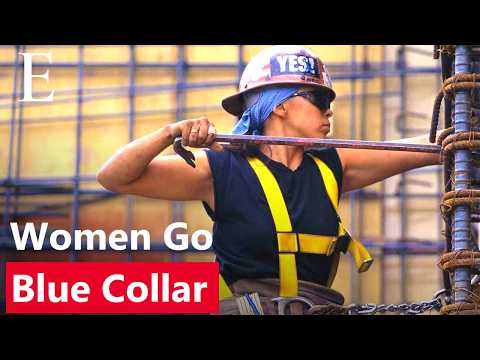
Why Women Are Choosing Blue-Collar Jobs Over College
Summary
Women are increasingly entering blue-collar jobs due to improved pay and recruitment strategies. The construction and technical trades face significant labor shortages, with over 500,000 new workers needed annually to maintain current activity levels. As many experienced workers retire, the demand for new talent grows, creating opportunities for women in these fields.
Despite the rising interest among women, their participation remains low, with less than 4% of the construction workforce comprised of women. Cultural barriers and workplace challenges hinder their entry and retention in these roles. Addressing these issues is crucial for filling the estimated 200,000 positions that could be occupied by women.
Technical training programs have emerged as effective solutions, allowing individuals to gain skills while working. These programs have high certification rates, enabling participants to secure stable jobs quickly. The combination of practical experience and theoretical learning meets current labor market needs and reduces reliance on lengthy education paths.
Increasing female participation in blue-collar jobs could significantly impact the economy, potentially boosting GDP by 10%. This inclusion not only enhances workforce diversity but also addresses the pressing labor shortages in the construction and technical sectors. Promoting labor inclusion is essential for sustained economic growth.
Perspectives
short
Support for Women in Blue-Collar Jobs
- Highlight improved pay and job security in blue-collar roles
- Emphasize the need for new workers due to retirements in the industry
- Point out the effectiveness of technical training programs in skill acquisition
- Argue that increasing female participation can boost economic growth
- Stress the importance of addressing cultural barriers to enhance workforce diversity
Challenges Facing Women in Blue-Collar Jobs
- Identify low female participation rates in the construction workforce
- Discuss cultural barriers and discrimination affecting womens retention
- Note that only 30% of vacancies are filled on time due to labor shortages
- Mention that women often lack opportunities for professional development
- Acknowledge that project delays result from difficulties in finding qualified workers
Neutral / Shared
- Recognize the growing demand for skilled workers in the construction sector
- Acknowledge the economic activity generated by the technical trades
Metrics
wage_growth
25%
increase in average starting salaries for skilled workers
Rising wages make these jobs more appealing for those seeking financial security.
average starting salaries for skilled workers has risen over 25% from 1870 an hour in 2019 to 2343 an hour in 2025.
female_plumbers_salary
$60,000 USD
annual salary of a female plumber
This salary reflects the financial stability offered by blue-collar jobs.
a female plumber earned $60,000 per year.
electricians_women_percentage
3.5%
percentage of electricians who are women
This low percentage highlights the gender disparity in the industry.
As of 2025, only 3.5% of electricians and 3.1% of plumbers and carpenters are women.
carpenters_women_increase
17%
increase in the number of women working as carpenters
This growth indicates a positive trend towards gender diversity in trades.
the number of women working as carpenters has increased by 17% over the same period.
automation_percentage
10%
percentage of construction tasks that can be fully automated
This low percentage emphasizes the continued need for human labor in the sector.
Currently, less than 10% of construction tasks can be fully automated.
workers_needed
more than 500,000 units
annual worker shortage in construction and technical sectors
This shortage significantly impacts project timelines and costs.
It is estimated that more than 500,000 new workers are needed each year to maintain the current pace of activity.
female_participation
less than 4%
percentage of women in the construction workforce
Low female participation limits industry growth and diversity.
Currently, less than 4% of the construction workforce is made up of women.
positions_filled_by_women
more than 200,000 units
potential positions that could be filled by women
Filling these positions could enhance workforce diversity.
It is estimated that more than 200,000 positions could be filled by women, if better access and retention conditions existed.
Key entities
Timeline highlights
00:00–05:00
The trend of women entering blue-collar jobs is driven by improved pay and recruitment strategies, addressing labor shortages in the construction and technical trades. With over 25% of the workforce expected to retire in the next decade, attracting new workers is essential for sustaining industry growth.
- More women are pursuing blue-collar jobs due to improved pay and recruitment strategies, creating new career paths in a labor market with shortages
- The construction and technical trades are facing a significant retirement wave, with over 25% of the workforce expected to retire in the next decade, necessitating new workers to sustain industry growth
- Blue-collar jobs are increasingly attractive to women as they provide financial stability and are less likely to be automated than office positions, addressing labor shortages while offering viable career options
- Cultural barriers and discrimination still hinder womens participation in the construction sector, making it crucial to tackle these issues to maximize womens potential in high-demand jobs
- Wage growth in skilled trades has been significant, with starting salaries rising sharply, making these jobs more appealing for those seeking faster financial security
- The technical trades sector contributes over $500 million annually to the economy, underscoring its importance, and increasing female involvement could enhance productivity and infrastructure development
05:00–10:00
The construction and technical sectors face a significant shortage of over 500,000 workers annually, leading to project delays and increased costs. Women represent less than 4% of the workforce, and improving access and retention could fill over 200,000 roles, enhancing diversity and economic growth.
- The construction and technical sectors are short over 500,000 workers each year, leading to project delays and higher costs, which emphasizes the need to shift perceptions of manual labor as a viable career option
- Women currently make up less than 4% of the construction workforce, which limits industry growth; improving access and retention could fill over 200,000 roles and enhance workforce diversity
- Many women find the work environment unwelcoming, indicating that creating supportive conditions is essential for their long-term success in the sector
- Technical training programs are effectively addressing labor shortages, with over 70% of participants achieving certification quickly, facilitating workforce entry and meeting market demands
- Increasing female participation in blue-collar jobs could potentially raise GDP by 10% through enhanced purchasing power and workforce engagement, highlighting the importance of labor inclusion for economic growth
- The ongoing worker shortage in the technical and construction sectors threatens industry stability and broader economic health, making targeted recruitment and training strategies vital for future infrastructure development